
Table of Contents
Definition And Overview Of Scoliosis
- Sagittal plane
- Coronal plane
- Axial plane
Briefly mention the causes, including genetic factors, musculoskeletal imbalances, and idiopathic scoliosis.
Scoliosis affects only 2-3% of the population or an estimated six to nine million people in the United States. It can develop during infancy or in the early years of childhood. However, the primary age of the start of this illness is 10-15 years of age, occurring among both genders equally. Females are around eight times more likely to have a progressive case of the curve magnitude that needs ideal treatment.
Scoliosis is classified by etiology: congenital, idiopathic, or neuromuscular. Idiopathic scoliosis is a diagnosis when all other causes are exempted and only comprise 80% of all cases. Congenital scoliosis happens from the embryological malformation of the vertebrae and can occur in any location on the spine. The vertebral curvature causes other spine deformities because part of the spinal column lengthens at a lesser rate than the rest.
The Importance of Early Detection
Early detection of scoliosis is critical as it can help prevent the condition from becoming severe. If the case is left untreated, it can cause significant changes to the shapes and form of the spine, leading to chronic pain and reduced flexibility and range of motion. It may also lead to some other issues, including breathing issues and cardiopulmonary disorders. Additionally, if this condition progresses, it may also cause the spine to form an abnormal curve so incredibly that surgery might be required.
Scilosis is mostly confirmed using a body scanner to produce a physical examination assessment. The curve is measured using the Cobb method and diagnosed with several degrees’ rates. A positive diagnosis of scoliosis is made by assessing the coronal curvature measured on the anterior-posterior radiograph of more than 10 degrees.
A curve is considered a lot if it is higher than the 25 to 30-degree curve. Curves over 45-50 are considered severe and need aggressive treatments. Hence, early detection is better and can be treated with more straightforward therapies to obtain a cure.
Recognizing the Signs of Scoliosis
Key physical indicators to watch for include
1. Uneven shoulders and shoulder blades.
2. Rib hump and asymmetrical waist.
An unnatural curve and rotation of one’s spine may also cause the rib cage to form a bump on one side of the body. This results in a rib hump. Moving your hands along the back or the front side of your body and feeling a slight lump near the rib cage may indicate scoliosis. A rib hump may also feel more noticeable if you slightly bend over on the waist and look at the body from the side through a mirror.
An uneven waistline is also significant when looking at yourself from the back; you might notice that one side of the waist is lower or higher than the other. This is because when the spine curves abnormally, it may pull the waist over to one side, making it look quite uneven.
3. Uneven hips or pelvis.
4. Back pain is a common symptom.
Assessing Scoliosis Severity
- Mild scoliosis: 10-25 derees
- Moderate scoliosis: 25-45 degrees
- Severe scoliosis: more than 45 degrees
At-Home Detection Methods
- The head isn’t centered above the pelvis
- Each hips are raised or is unusually higher
- Rib cages fall at different heights
- The waist is also uneven
- The whole body leans towards one side
- The appearance or overall texture of the skin on the spine changes color or texture.
Professional Diagnosis of Scoliosis
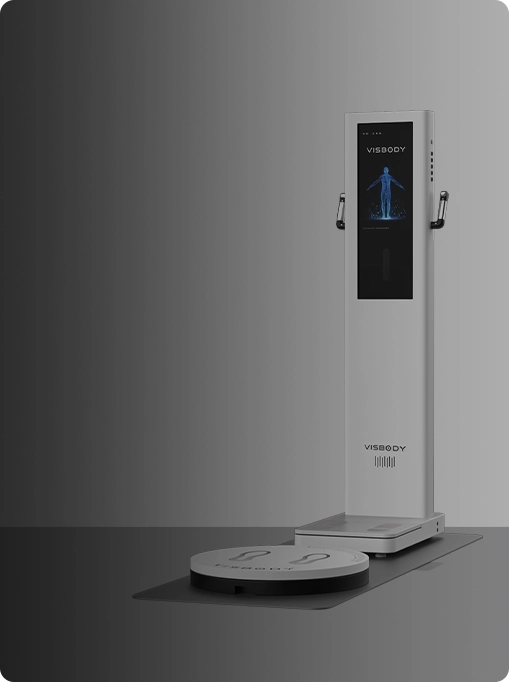
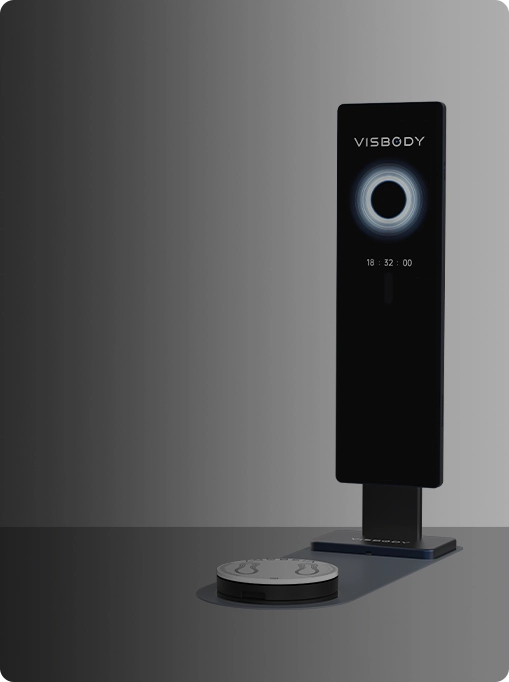
5. Digital posture analysis, like Visbody 3d body scanner
A digital posture analysis is done using a 3d body scanner device. It is a process in which your postures of the posture are captured in a standing position. With unique MUF technology- -automatic mechanical turntable measurement combined with depth-sensing 3D camera. These images will be analyzed using a precise software program to recognize the postural imbalance, and poor alignment of the spine.