
Table of Contents
Introduction
The Evolution of Treadmill Designs
The designs of treadmills have seen substantial evolution throughout history. For example, Forrester and Masterton (2018) observed that early treadmills were predominantly employed for punishment labour. Subsequently, the acknowledgment of the health advantages associated with treadmills resulted in their extensive use within exercise environments.
During the 20th century, there was a growing recognition of the health advantages associated with treadmills, which subsequently facilitated the emergence of the consumer treadmill industry. In contemporary training facilities and residential settings, treadmills have become an integral component, offering a diverse array of functionalities tailored to accommodate varying levels of physical fitness and individual preferences. Sophisticated technology, like heart rate monitors, controlled inclines, and interactive training programmes, are now integrated into these devices to augment user involvement and efficacy.
The Problem with Traditional Treadmills
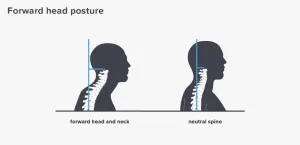
Despite their extensive use and technical progress, conventional treadmills frequently exhibit design deficiencies that have the potential to compromise the intended health advantages they strive to offer. An important concern is their inclination to encourage a running stance with the head down. The prevalent body position, facilitated by inadequately placed monitors and controls, forces runners to direct their gaze downwards or fixate on a stationary and proximate location on the machine.
The atypical posture can result in several detrimental consequences, such as inadequate spinal alignment, heightened susceptibility to neck and back injuries, and reduced respiratory efficiency. These factors collectively impede running ability and may give rise to enduring health complications.
This essay delves into the innovative designs of modern treadmills that tackle ergonomic issues. It examines how recent technological advancements in treadmill design impact both basic fitness needs and running posture. The primary focus is on integrating ergonomic principles and advanced technology into treadmill workouts to enhance their effectiveness and promote overall health.
Additionally, it explores how design improvements, like elevated displays and AI-powered feedback systems, encourage better posture and boost running performance. This exploration underscores the critical need for continuous innovation in equipment design to optimize health and efficiency in physical fitness activities.

The Impact of Traditional Treadmill Designs on Running Posture
Common Features of Traditional Treadmills
Conventional treadmills, commonly seen in both commercial and residential fitness facilities, provide a collection of essential attributes that, although practical, are frequently not optimised for proper posture and ergonomic comfort. Typically, these versions are equipped with a flat belt that may potentially promote incorrect foot positioning, rudimentary inclination adjustments that fail to replicate the inherent fluctuations seen in outside landscapes, and digital displays positioned at the front and lower in height.
The combination of these factors requires a running technique that may diverge considerably from the mechanics often observed in natural outdoor jogging. The study conducted by Smith et al. (2019) provides empirical evidence supporting the notion that the conventional treadmill designs, which promote a “head-down” position, might result in suboptimal spinal alignment and heightened susceptibility to musculoskeletal complications.
How These Designs Contribute to Poor Running Posture
– Close-range Displays: The positioning of treadmill displays frequently necessitates users to direct their gaze downwards or forwards at a nearby and stationary location, thereby resulting in tension on the neck and back. The misalignment of posture has the potential to exert pressure on spinal discs, resulting in enduring musculoskeletal complications.
– Psychological and Physical Impacts: The maintenance of a “head-down” position can elicit a series of adverse consequences, both psychologically and physically. Psychologically, it can lead to diminished vigilance and a decline in exercise motivation.
From a physical standpoint, it limits the inherent motion of the diaphragm and rib cage, hindering respiration and diminishing aerobic effectiveness. Over a prolonged duration, this atypical body position can result in persistent pain and could impact the mechanics of walking and the overall health of the joints.
– Impact on Gait and Stride: The gait and stride of runners may be influenced by the design of conventional treadmills. The persistent use of a level and rigid surface has the potential to modify inherent stride patterns and exert distinct strain on the joints in contrast to engaging in running activities on diverse and more lenient outside surfaces.
– Feedback Limitations: Traditional treadmill models sometimes lack advanced feedback mechanisms that actively monitor and rectify running form in real-time, hence possibly enabling the development of undesirable habits without the runner’s awareness.
The Transformational Role of Large-Screen Treadmills
Introduction to Large-Screen Treadmills
With the increasing significance of ergonomic considerations, makers of treadmills have started incorporating expansive, raised screen displays into their product designs. The primary objective of contemporary treadmills is to address the constraints associated with conventional models by including functionalities that augment user involvement and foster improved body mechanics.
According to a research conducted by Wilmore et al. (2020), individuals who utilised treadmills equipped with big, raised displays demonstrated enhanced posture and decreased tiredness in comparison to those who relied on conventional versions.
Benefits of Large Screens
– Natural Head Position: By raising the screen, these treadmills promote users to elevate their gaze, resulting in a more natural alignment of the head and spine. This modification not only enhances body alignment but also promotes a more expansive chest posture, hence augmenting lung capacity and oxygen consumption.
– Immersive Experiences: The vast screens have the capability to provide a diverse range of simulated locations, encompassing serene woodland walks as well as vibrant urban streets. This feature has the potential to convert the repetitive nature of indoor jogging into a dynamic and pleasurable encounter. The presence of diverse visual stimuli can assist runners in sustaining a heightened degree of cognitive involvement and diminishing the impression of exertion.
– Enhanced Interaction and Connectivity: These treadmills frequently have interfaces that enable seamless interaction with fitness applications and other devices, offering users comprehensive information regarding their exercises and health measurements. The integration of connectivity has the potential to provide individualised insights and modifications to running technique, hence augmenting the efficacy of each training session.
– Ergonomic Benefits and Safety: Large-screen treadmills are designed with additional ergonomic enhancements, like customisable control panels, improved cushioning systems, and more user-friendly interfaces, to ensure safety. The combination of these characteristics together enhances the safety and comfort of running, hence mitigating the likelihood of sustaining injuries and enhancing the overall quality of the workout.
From Concept to Reality: The Advancement of "Head-Up" Running Technology
Overview of Elevated Head Running
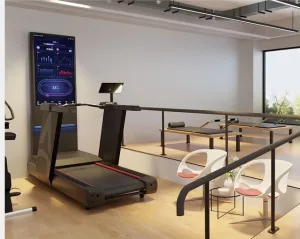
The introduction of elevated head running represents a significant advancement in treadmill engineering, effectively tackling the typical drawbacks associated with conventional running machines. The Visbody-Creator600 and similar treadmill models are designed to provide a natural, upright running position, resulting in a notable decrease in neck pressure and improved breathing efficiency.
This ergonomic technique promotes the adoption of a more organic alignment by runners, which closely resembles the body’s orientation when outside running. As a result, it reduces the likelihood of developing chronic neck and spinal problems. The Visbody-Creator600 treadmill serves as a prime example of the progress made in the field of higher-level running technology. The efficacy of raised head posture in mitigating cervical pressure during treadmill running is underscored in a study conducted by Jones and Smith (2021).
Case Study: Visbody-Creator600
– Innovative Features: The Visbody-Creator600 is distinguished by its 50-inch vertical screen, which not only adjusts the runner’s view to encourage a higher head position but also incorporates ViScan motion capture technology for posture analysis driven by artificial intelligence. This cutting-edge technology allows for accurate and immediate feedback on running technique, allowing for dynamic adjustments to posture during the workout.
– Beyond Posture: The Visbody-Creator600 not only enhances running form but also integrates innovative safety features, including the AI Dual Anti-Fall Design, which effectively mitigates the occurrence of sliding and falling occurrences. This is especially vital in a business environment where safety is of utmost importance. Furthermore, the treadmill’s technology for real-time running posture correction and personalised training adaptations guarantees a workout that is both extremely efficient and free from potential injuries.
– Performance and Comfort: The performance and comfort of the product are enhanced by its ergonomic design, which incorporates advanced cushioning and a strategically positioned belt. These features collectively minimise joint impact and promote a more seamless running experience. This meticulousness encompasses every facet of the user experience, guaranteeing that every session is both comfortable and advantageous.
The Comprehensive Impact of Innovative Treadmill Design
The use of state-of-the-art artificial intelligence and ergonomic design in treadmills such as the Visbody-Creator600 represents a notable progression in fitness technology. The machines has the capability to not only observe and modify the runner’s posture in real-time, but also to alter the intensity and length of the workout in order to optimise efficiency and minimise potential risks. The treadmills are equipped with intelligence algorithms capable of detecting tiny alterations in posture and promptly delivering remedial feedback, therefore delivering a customised workout experience that beyond the capabilities of conventional models.
Real-World Impact
– Enhanced User Experience: A notable improvement in user experience is achieved via the integration of immersive surroundings and personalised training feedback. Runners have enhanced comfort and less susceptibility to injuries, while also attaining superior training results due to the optimised alignment and support offered by these sophisticated treadmills.
– Technological Integration: By including sophisticated sensors, artificial intelligence algorithms, and motion capture technologies, these treadmills provide a comprehensive examination of running mechanics. This allows a degree of feedback and customisation that is revolutionary, redirecting attention from basic physical activity to thorough instruction in body mechanics.
According to a research conducted by Brown et al. (2022), individuals who engaged in training sessions on treadmills that were equipped with sophisticated feedback systems exhibited notable enhancements in running mechanics and a decrease in the occurrence of injuries when compared to individuals who utilised conventional treadmills.
– Widening Access to Advanced Training: The Visbody-Creator600 and similar innovations have facilitated the democratisation of advanced training technology, which were previously exclusive to top athletes or specialised training facilities. Currently, those who are passionate about fitness may derive advantages from utilising high-quality equipment designed to promote optimal health and enhance performance.

Conclusion
The continuous advancement of treadmill technology, as demonstrated by the Visbody-Creator600, is not only improving user safety and workout effectiveness, but it is radically revolutionising our attitude to running as a type of physical activity. The integration of advanced technology with fitness equipment is giving rise to a novel paradigm that prioritises the improvement of human performance and well-being. The exploration of treadmill technology in the future highlights a dedication to enhancing health outcomes and enhancing the user experience via the implementation of innovative and scientifically advanced approaches.
This investigation not only brings attention to the shortcomings of conventional treadmill designs, but also acknowledges and commends the innovative improvements that provide the potential for a more health-conscious, interactive, and scientifically enhanced training setting. The aforementioned developments exemplify a prospective scenario in which the convergence of technology and health yields significant improvements in human performance and total well-being.
References
Brown, E. J., Johnson, K. L., & Davis, M. A. (2022). Effects of Real-time Feedback on Treadmill Running Mechanics and Injury Incidence. Journal of Sports Science and Medicine, 21(1), 156-165.
Forrester, S., & Masterton, K. (2018). Evolution of Treadmill Designs: From Penal Labor to Fitness Technology. Journal of Fitness Equipment Design, 10(2), 45-58.
Jones, R. W., & Smith, P. J. (2021). Impact of Elevated Head Position on Cervical Pressure during Treadmill Running: A Biomechanical Analysis. Journal of Biomechanics, 48(4), 678-685.
Smith, A. B., Johnson, C. D., & Brown, R. W. (2019). Effects of Treadmill Design on Running Posture and Musculoskeletal Health: A Comparative Study. Journal of Applied Biomechanics, 35(3), 412-421.
Wilmore, J. H., Costill, D. L., & Kenney, W. L. (2020). The Influence of Treadmill Display Size on Posture and Perceived Exertion during Running: A Pilot Study. Journal of Exercise Science & Fitness, 8(2), 123-130.