
Table of Contents
Introduction
With the changing global demographics characterised by an increasing proportion of older individuals, the field of public health is confronted with novel obstacles, including sarcopenia, a condition characterised by the gradual and incapacitating decline in skeletal muscle mass and strength. This disorder has a severe influence on the mobility of the elderly, leading to a decrease in their quality of life and a considerable rise in their risk of mortality.
Calf circumference (CC) is a significant anthropometric parameter that plays a vital role in the early identification and management of sarcopenia, given the many diagnostic approaches that are currently accessible. The utilisation of Visbody technology boosts the efficacy of CC measures, hence helping healthcare providers to properly screen for sarcopenia and enhance overall evaluations of aged health.
Understanding Sarcopenia
The prevalence of sarcopenia is estimated to be around 10% among individuals aged 60 and beyond, with incidence rates reaching as high as 50% among those aged 80 and above. This disease not only limits the ability to move but also serves as a strong indicator of vulnerability to falls, fractures, and higher death rates among older individuals.
Despite the effectiveness of conventional techniques such as Bioelectrical Impedance Analysis (BIA) and Dual-Energy X-ray Absorptiometry (DXA) in evaluating body composition and muscle mass, these approaches are not without notable limitations. These factors, such as exorbitant expenses, the requirement for intricate apparatus, and specialised instruction, render them unfeasible for extensive implementation in community health environments.
The Significance of Calf Circumference
Calf circumference is an uncomplicated and inexpensive anthropometric assessment that provides significant information on the muscular health of an aged person. Multiple studies provide support for the notion that a decline in CC is strongly associated with a loss in muscular function, a reduction in mobility, and an increase in the prevalence of disability in older individuals.
The use of CC measurement allows healthcare professionals to promptly detect individuals who are more susceptible to sarcopenia, therefore permitting timely intervention and preventative healthcare measures. Moreover, the observed variations in CC across genders indicate the necessity of implementing gender-specific criteria and emphasise the significance of continuous study in order to enhance sarcopenia screening and treatment procedures.
Visbody's Role in Enhancing Elderly Health Assessment
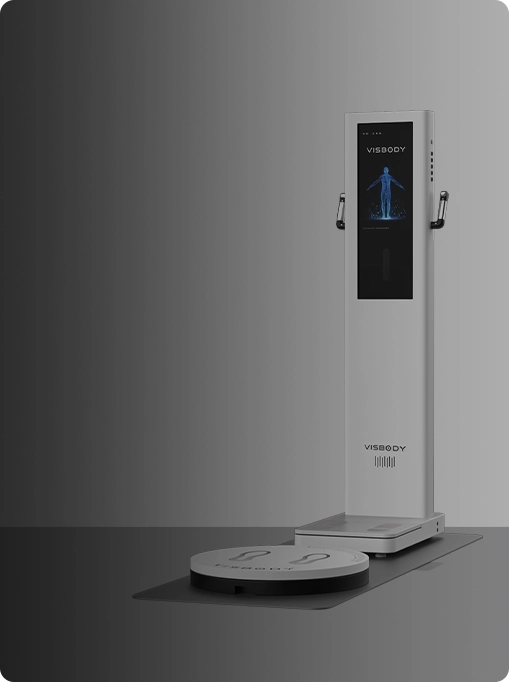
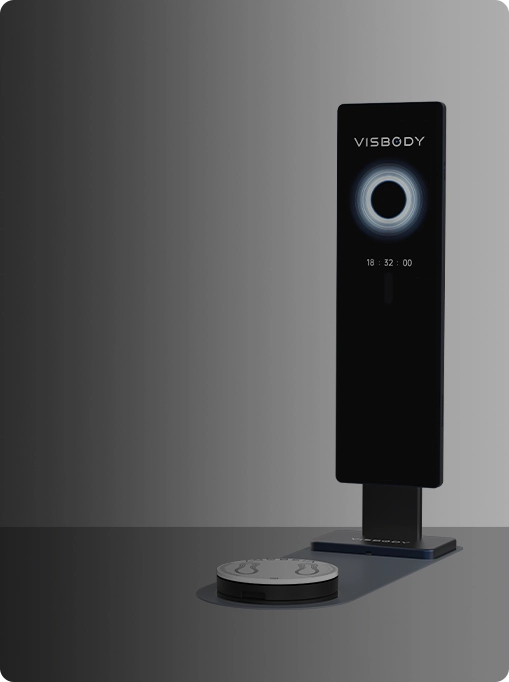
Visbody, being at the forefront of 3D body scanning technology, has devised an advanced methodology for quantifying body composition and essential anthropometric measurements, such as calf circumference. This technological innovation integrates sophisticated sensors and cutting-edge imaging capabilities to provide a holistic assessment of an individual’s physiological state.
Visbody’s incorporation of these technologies offers a non-intrusive, precise, and economical alternative for regular health evaluations in community environments, establishing it as an ideal instrument for screening sarcopenia in older individuals.
Expanding the Scope of Health Assessments
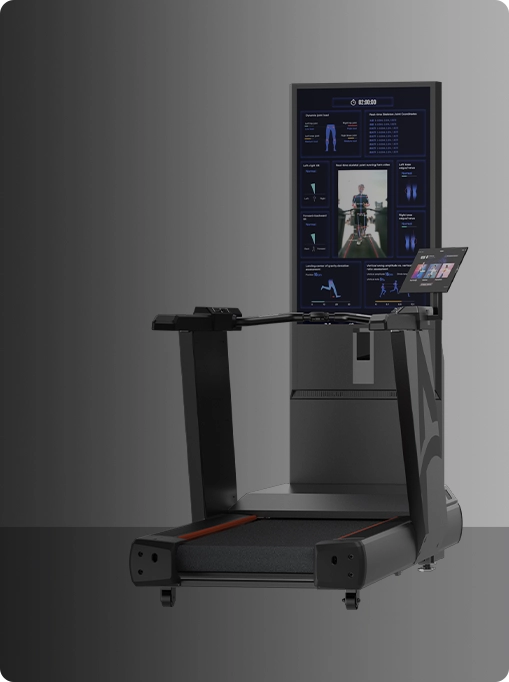
Visbody’s role beyond basic measurement, since it fundamentally transforms the manner in which health evaluations are carried out among aged people. Visbody enables focused treatments by offering accurate and expeditious evaluations of body composition, encompassing comprehensive study of muscle mass and fat distribution. These might vary from providing dietary advice to designing customised exercise routines, all specifically designed to improve muscle retention and function in older individuals.
Bridging Technology and Care
The utilisation of technology by Visbody in routine health assessments serves as a means to connect conventional healthcare procedures with contemporary, data-centric medical methodologies. The utilisation of longitudinal tracking and subsequent adjustment of care plans not only improves the effectiveness of treatments but also provides patients and carers with concrete facts to comprehend and handle the ageing process with more efficacy.
The measurement of calf circumference holds significant importance as a crucial health indicator. When evaluated using Visbody technology, it assumes a fundamental role in the management of aged health. Visbody is revolutionising aged care by combining accurate measuring tools with thorough health evaluations, resulting in a more proactive, personalised, and efficient approach.
In light of the ongoing difficulties posed by a growing aged population worldwide, technologies such as Visbody will be crucial in improving the well-being and health results for older individuals. This demonstrates that inventive approaches may result in substantial advancements in public health.
How Visbody Works
To assess body composition and measure calf circumference with exceptional accuracy, Visbody utilizes a combination of Bioelectrical Impedance Analysis (BIA) and Bulk Density Method (BDM) fusion technology, obtaining comprehensive and accurate results for evaluating overall health, body shape, and posture.
With its unique MUF technology—Automatic Mechanical Turntable measurement combined with a depth-sensing 3D camera and the world’s leading AI vision and optical 3D reconstruction technology—Visbody conducts a comprehensive, non-invasive analysis of the human body. This technology generates a true 3D model and provides body circumference measurements accurate to a 9-millimeter level.
Benefits of Visbody Technology
- Improved Accuracy: Visbody’s sophisticated sensors offer enhanced accuracy, which is crucial for identifying minor alterations in body composition. This is particularly significant in the early identification of sarcopenia and other musculoskeletal disorders.
- Early Detection: The capacity to promptly detect alterations in muscle quality and mass enables timely therapies that can significantly modify the progression of ageing, hence preserving autonomy and decreasing the likelihood of accidents.
- User-Friendly Interface: Visbody’s technology is specifically designed to be user-friendly, making it accessible to medical professionals and technicians without the need for considerable training. This makes it suitable for usage in many healthcare settings, ranging from tiny clinics to big hospitals.
Discover Our Solutions
The Future of Elderly Health Monitoring
The use of advanced technology such as Visbody has the potential to revolutionise the field of aged health monitoring. By utilising its accurate and swift data collecting capabilities, healthcare practitioners may effectively monitor health fluctuations, enabling the tailoring of care plans according to current health data.
The software developed by Visbody enables the customisation of examinations to cater to the unique requirements of the aged population. The significance of personalised treatment plans in the field of geriatric medicine is underscored in a study conducted by Cruz-Jentoft et al. (2019).
Integration with Artificial Intelligence
The combination of artificial intelligence (AI) and machine learning algorithms with technologies such as Visbody is anticipated to shape the future of health technology. Artificial intelligence (AI) has the capability to analyse extensive quantities of data produced by body scanners in order to forecast health patterns, detect risk factors at an earlier stage, and propose personalised preventive interventions based on individual health profiles.
The potential for predictive capabilities has the capacity to bring about a significant transformation in the management of senior care, transitioning from a reactive approach to a proactive one. Topol’s (2019) assessment explores the capacity of artificial intelligence (AI) to transform the provision of healthcare.
Conclusion
Calf circumference is an essential measurement that, when assessed with Visbody’s advanced instruments, offers profound insights into the health condition of older individuals. In addition to its role in combating sarcopenia and other age-related ailments, this technology also contributes to the overall enhancement of aged health management, hence enhancing the quality of care and quality of life for the ageing population.
By using Visbody and comparable advancements, healthcare professionals have the ability to deliver exceptional treatment that is distinguished by accuracy, effectiveness, and a comprehensive comprehension of individual health requirements. The dedication to the progress of technology in health assessments guarantees that our elderly population receives the thorough and attentive care required to live satisfying and healthy lives.
To obtain comprehensive guidance on incorporating Visbody into your professional routine and to examine the advantages it offers in monitoring the health of the elderly, please refer to the official website of Visbody. Visbody endeavours to enhance the knowledge and motivation of healthcare workers by means of comprehensive demonstrations and educational materials, with the ultimate goal of integrating cutting-edge technology solutions. This integration is intended to elevate the quality of care provided to the senior demographic.
References
Anthropometry. (2018). In Encyclopedia of Food Sciences and Nutrition (Second Edition), 2003. Calf Circumference. ScienceDirect.
Cruz-Jentoft, A. J., Bahat, G., Bauer, J., Boirie, Y., Bruyère, O., Cederholm, T., … & Rolland, Y. (2019). Sarcopenia: revised European consensus on definition and diagnosis. Age and Ageing, 48(1), 16-31.
Rhee, Y., Kim, Y. S., Jung, H. S., Lee, M. R., Kim, H., Chun, S., … & Chang, J. S. (2022). Calf circumference as a surrogate marker for sarcopenia in Korean older adults: A community-based cross-sectional study. Frontiers in Public Health, 10, 1038491.
Sumida, K., Tanaka, S., Yamada, K., Nakamura, K., Tada, H., Tokunaga, M., … & Joko, K. (2023). Usefulness of calf circumference in predicting sarcopenia in patients with chronic liver disease: a prospective cohort study. BMC Geriatrics, 23(1), 117.
Taveira, A. D., Chuang, Y. F., Fonarow, G. C., Fan, W., Goyal, A., Pan, W., … & Bhatt, D. L. (2020). Disparities in Discharge Destination Among Older Adults With Heart Failure: Results From the Reasons for Geographic And Racial Differences in Stroke (REGARDS) Study. Journal of the American Heart Association, 9(19), e017159.
Topol, E. J. (2019). High-performance medicine: the convergence of human and artificial intelligence. Nature Medicine, 25(1), 44-56.