
Do you know over one billion people in the world are obese, and the rate is increasing exponentially with the changing food habits? What’s worse? Unlike other common health disorders, obesity progresses with time, leading to severe consequences.
Whether it’s type 2 diabetes, heart disease, or cancer, Obesity is strongly linked to every acute and chronic body disorder. Therefore, it is the need of the hour that you start taking it seriously if you want to live a healthier life ahead.
The best way to maintain a healthy lifestyle is by developing a deeper understanding of obesity and how it is related to severe health conditions. This article delves deeper into the effects, symptoms, and diagnosis methods of obesity so you can get back to normal life.
Table of Contents
Understanding Obesity: Classification and Symptoms
Let’s begin with the basic concept of what obesity means. Generally, when excessive fat is stored in your body cells, specifically adipose tissues, and you start feeling overweight, that’s how you define an obese person. It simply means having too much body mass than usual. It is a prevalent disease, with one in every eight people being obese in the World. Enlisted below are some of its common symptoms:
- Breathlessness
- Increased sweating
- Feeling tired
- Joint or back pain
- Low self-esteem
Apart from these general signs, doctors can diagnose obesity based on the following body measurements:
- Excess amount of abdominal fat
- A body mass index (BMI) of over 30
- A waist circumference higher than 40 inches for men and 35 inches for women
How is Obesity Classified?
Being a highly common disease, obesity comes in multiple variants. Based on the body mass index value, it is classified into the following categories:
- Underweight: Having a BMI of 18.5 or low
- Overweight: BMI of 25 to 30
- Class I Obesity: BMI of 35 to 40
- Class II Obesity: BMI of 40 to 45
- Class III Obesity or Morbid Obesity: BMI of 40 or higher
Morbid or Class III Obesity is a complex chronic disease in which the affected person experiences severe health conditions, leading to medical complications. Besides, there is another category of obesity diagnosed in children over 2 years or teenagers. To assess childhood obesity, a doctor examines the body mass index value. If it’s above the 95th percentile or greater, it’s a sign that the child is overweight or at risk of obesity-related health issues.
How Does Obesity Affect My Body?
1. Metabolic Changes
2. Direct Effects
3. Indirect Effects
How is Obesity Diagnosed?
1. BMI (Body Mass Index)
Body Mass Index, also known as BMI, is another method commonly used to measure body fat and overall body composition. It takes into account your height and weight to determine your health state. With the help of BMI value, you can track your body progress and get a review of your body composition.
However, it is important to note that BMI does not measure your body fat directly; it predicts results based on height and weight calculations. A high BMI value means excessive fat is stored in the body, while a lower BMI indicates underweight. The average BMI value ranges from 18.5 to 29.4 for healthy men and women.
2. Skinfold Thickness Tests
3. Waist-to-Hip Ratio
4. DEXA Scans
5. Ultrasounds, CT Scans, and MRI Scans
With the advancements in technology, new and innovative methods are being introduced to diagnose obesity. Now, high-performance ultrasounds can be performed to indicate a person’s obesity. This scanning machine checks the abdominal anatomy and thus provides accurate details about the body’s health status.
Similarly, radiologists conduct CT(Computed Tomography) scans to evaluate the body fat percentage. This scan measures the extra weight and size to give insights into a person’s health. A more advanced scan called MRI or (Magnetic Resonance Imaging) is also done using computer-generated radio waves to get a detailed image of the body’s organs.
6. Additional Health Risk Tests
The diagnosis of obesity is a broad aspect, taking into account various methods and scanning procedures. Besides the simple body mass index and fat evaluation techniques, here are some additional tests that can help in the diagnosis process:
- Blood Tests
- Liver Function Tests
- Diabetes Screening
- Thyroid Tests
- Heart Tests (e.g., ECG/EKG)
Using Visbody Body Composition Analyzer for a Comprehensive Analysis
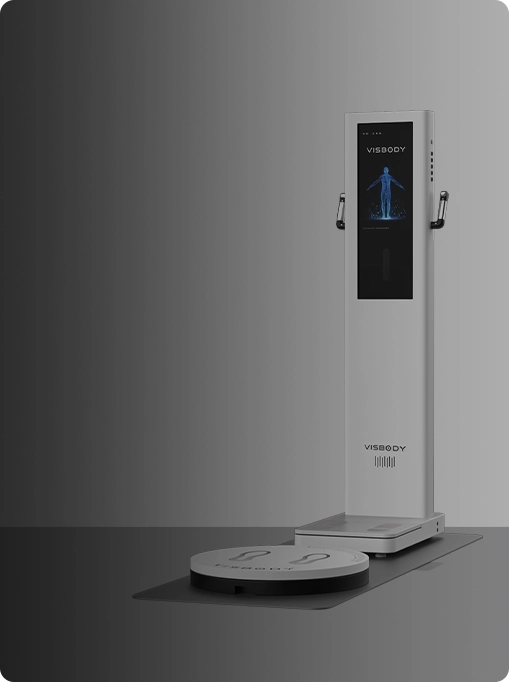
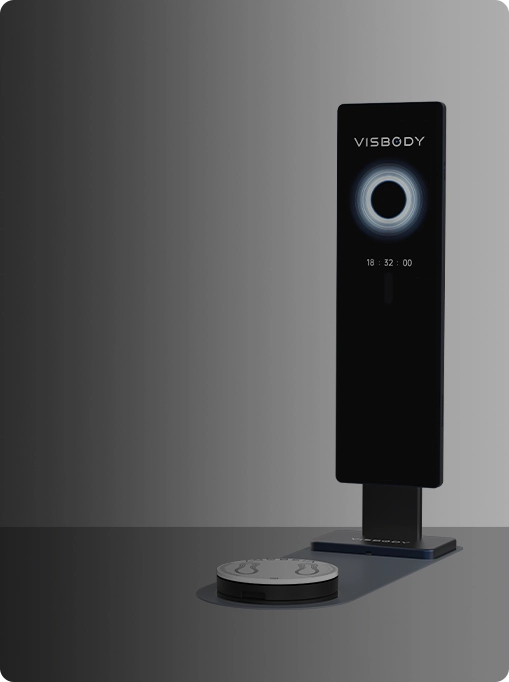
Although the diagnosis methods discussed above are highly efficient in their work, they come with certain limitations. For instance, the BMI index method does not measure your muscle mass or evaluate your bone mass percentage. Therefore, you need to look for a reliable and latest scanner to measure the body fat percentage and assess obesity. Here comes the Visbody 3D Scanner Machine.
It is an innovative body scanner device that considers your lean body mass, muscle mass, and 13 body circumference measurements. Moreover, it measures body weight, size, waist-to-hip ratio, visceral fat, and segmental fat. Not only this, but it also evaluates 9 different posture assessments and then generates a precise report based on the scan results. The 3D body avatars help produce fully accurate and 100% precise data of your complete physique. Here are some key features of the Visbody scanner that help in evaluating obesity:
- It generates a 3D body avatar using human image scanning technology.
- This full-body 3D scanner takes 13 body circumference measurements, including neck, left and right thigh, and left and right calf circumference.
- It provides specific treatment plans that are tailored to the needs of people suffering from obesity or health-related conditions.
Discover Our Solutions
Wrapping Up: Treatment and Prevention of Obesity
Conclusively, obesity is beyond just a health disorder. It can lead to severe health complications resulting in the death of a person. Therefore, it is advised to maintain a healthy lifestyle such as exercise, eating a weight loss diet, and taking other practical measures to treat this clinical disease.
Fixing your sleep schedules and avoiding processed foods can also help prevent obesity. Besides, it is always great to consult your doctor and use medications to limit your body weight.