Technological developments consistently modify our approach to training and therapy in the ever-changing field of fitness and rehabilitation. Human Pose Estimation (HPE) is a significant breakthrough in the field of innovation. It utilizes artificial intelligence (AI) and 3D photography to transform our comprehension and enhancement of human movement.
Table of Contents
What Is Human Pose Estimation?
Human pose estimation refers to the process of determining the spatial configuration of a human body in an image or video. Human Pose Estimation (HPE) is an artificial intelligence (AI) system that carefully examines and interprets the movements of the human body from photographs or videos.
Human Pose Estimation, HPE utilizes advanced algorithms to identify and chart critical anatomical landmarks, such as joints and limbs, in order to create a digital depiction of a person’s body position in real-time. This feature enables accurate biomechanical analysis, continuous performance monitoring, and proactive injury prevention in several fields, such as sports, healthcare, and others (Cao et al., 2017; Toshev & Szegedy, 2014).
Three Common Types Of Human Models
There are three prevalent categories of human models.
1. Skeleton-based Model:
The skeleton-based model is a fundamental and essential method in Human Pose Estimation. The main emphasis is on the identification and analysis of skeletal joints, including the knees, elbows, hips, and shoulders.
This model enables a comprehensive comprehension of fundamental human movements and postural dynamics with great precision by generating a virtual skeleton. It is commonly employed in applications that necessitate accurate motion monitoring, such as studies in biomechanics, sports science, and sophisticated rehabilitation therapies.
The skeletal model’s capacity to isolate joint movements renders it useful for detecting and rectifying movement abnormalities and for devising precise exercise regimens (Shotton et al., 2013).
2. The contour-based model:
This approach utilizes the external outlines of the human body to detect and classify poses and shapes. This method is especially well-suited for applications that need visual recognition, analysis of gestures, and interactions with the user interface.
The contour-based approach is capable of accurately monitoring and examining activities such as ballet, yoga, and martial arts, which heavily rely on the shape and fluidity of motions, by specifically targeting the body’s silhouette.
Moreover, this model is advantageous in video games and virtual reality settings, since it can augment the interactive experience by recording the user’s shape. The contour-based model offers a less obtrusive and more visually intuitive approach to assessing human mobility (Bogo et al., 2016).
3. The volume-based Model:
Thisquantifies body volumes and forms, offering a three-dimensional depiction of the human form. This model is essential for conducting in-depth spatial analysis and medical diagnostics, as it has the ability to accurately represent the complete geometry of the body, encompassing muscle mass and the distribution of body fat.
The volume-based paradigm used in clinical settings allows for thorough evaluations of body composition, facilitating the identification of disorders such as obesity, anorexia, and muscular atrophy.
Additionally, it is extensively utilized in the production of personalized clothing, the analysis of ergonomic factors, and the development of virtual fitting rooms, where accurate body measurements are crucial. The volume-based model offers a comprehensive understanding of the human body, making it suitable for various applications in healthcare and consumer items (Loper et al., 2015).
Each of these human models provides unique benefits based on the individual needs of fitness training, rehabilitation therapy, or medical diagnostics. The selection of a model can have a substantial influence on the accuracy and efficacy of the application, underscoring the importance of choosing the suitable model for the desired use case.
These models jointly improve our understanding and abilities to better human biomechanics and health outcomes by tracking precise joint movements, assessing body shapes, and measuring body volumes.
How 3D Human Pose Estimation Works
3D HPE incorporates sophisticated depth-sensing technologies, like as 4D cameras, to accurately record spatial data. These advanced cameras use calculations to determine the distances between the camera and each point on the body, which allows for precise 3D reconstruction of positions.
The data is analyzed by machine learning algorithms to accurately forecast joint positions and movements. This allows for real-time feedback and detailed biomechanical assessments, which are essential for customized training programs and rehabilitation procedures (Zhou et al., 2019).
Use Cases And Applications Of Human Pose Estimation In Visbody Creator600
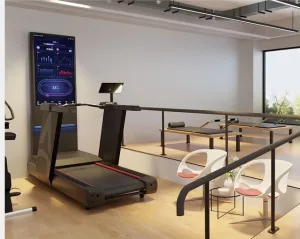
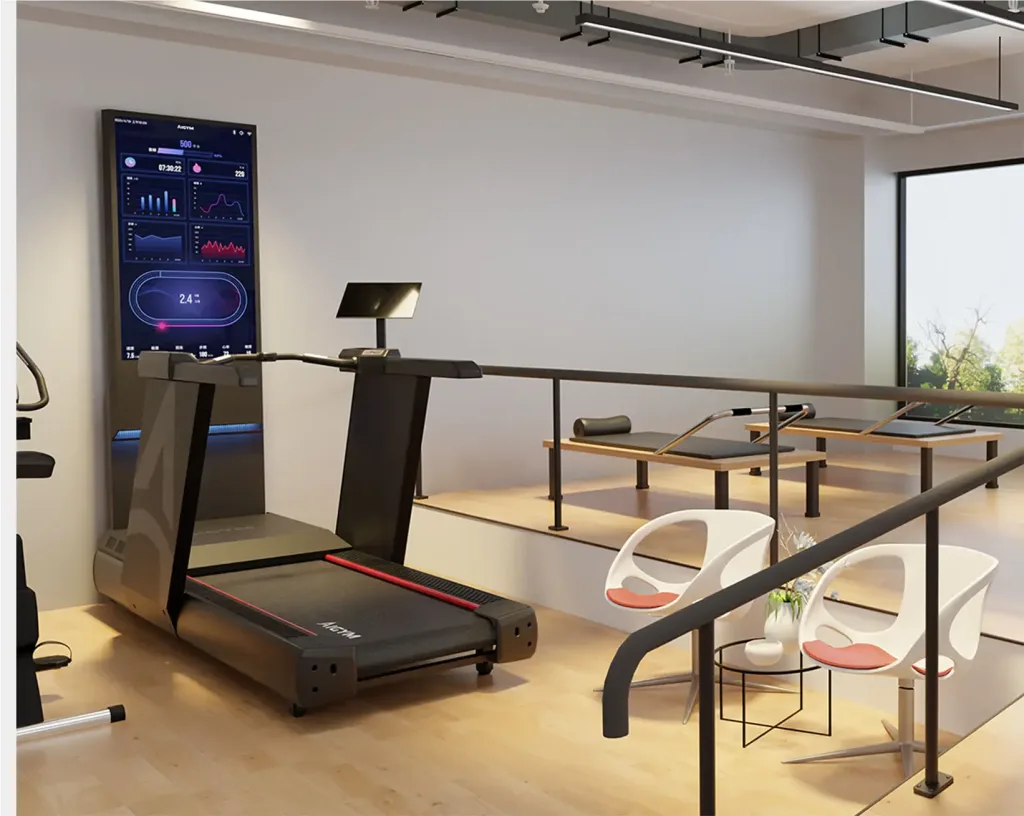
Visbody, a pioneering company in the field of dynamic 3D reconstruction technology, presents the Visbody Creator600—a revolutionary device that combines artificial intelligence with fitness equipment to transform the way people train. The Visbody Creator600 revolutionizes exercise and rehabilitation procedures in the following manner:
-4D Depth Camera Accuracy: The Creator600 utilizes cutting-edge depth-sensing technology to accurately capture and analyze the skeletal joint data of runners during treadmill workouts. This level of precision allows for a comprehensive comprehension of the biomechanics associated with each individual action.
The Creator600 can offer detailed information on stride length, joint angles, and general posture by capturing data at a highly precise resolution. This abundance of information enables the development of highly customized training programs aimed at maximizing performance metrics, improving running efficiency, and successfully reducing the risk of injuries.
Trainers and therapists can enhance the effectiveness of fitness gains by customizing interventions based on the accurate movement patterns of individual users. This allows them to target specific weaknesses or imbalances more effectively (Sminchisescu & Triggs, 2003).
– AI Dual Anti-Fall Design: The Creator600 incorporates AI Dual Anti-Fall Design, which utilizes sophisticated AI algorithms to greatly improve safety precautions during exercise sessions.
The AI dual anti-fall design functions by constantly monitoring the user’s motions to detect any indications of imbalance or instability. If the system identifies a possible fall, it has the capability to automatically modify the speed of the treadmill or halt it completely in order to avoid an accident.
This proactive safety approach not only protects users from any injuries but also promotes increased confidence during intense training routines. Users can exceed their boundaries with confidence, as the Creator600 offers an additional level of protection.
This function is especially advantageous for individuals undergoing rehabilitation or senior users who may have an increased susceptibility to falls, as it encourages long-term improvements in fitness and resilience (Liu et al., 2020).
Outlook And Future Trends
The future of Human Pose Estimation (HPE) in fitness and rehabilitation seems very bright. The confidence arises from ongoing progress in artificial intelligence (AI) and sensor technologies, which seek to improve the precision and broaden the range of applications for HPE systems.
Advancements in algorithms and sensors with higher resolution are anticipated to enhance the accuracy and level of detail in analyzing human movement. This, in turn, will lead to improved feedback quality and the effectiveness of treatments (Xiao et al., 2018).
Furthermore, the incorporation of HPE with AI-powered running coaches and intelligent analyzers is poised to transform tailored training routines. These systems have the ability to customize training routines based on the specific biomechanical profiles and fitness goals of individuals, providing a level of personalization that was previously impossible to achieve.
AI-enhanced running coaches can optimize performance and minimize the risk of injury by evaluating a person’s real-time movement patterns and providing quick changes and advice. This individualized method not only improves the user’s experience but also guarantees that the training is more efficient and in line with the user’s particular objectives (Chen et al., 2019).
The merging of technology and human-centered innovation represents a significant change towards tailored health and wellness solutions. With the increasing integration and accessibility of these technologies, we can anticipate a wider acceptance in diverse areas such as professional sports, physical treatment, and even regular workout routines.
The potential applications are extensive, encompassing advanced rehabilitation programs that dynamically adjust to the patient’s development, as well as consumer fitness apps that offer high-level guidance to the average user (Iqbal et al., 2018).
Furthermore, the future of HPE (Health and Physical Education) has great potential for improving general well-being, as well as providing tailored exercise and rehabilitation services (Sun et al., 2017).
These developments would not only improve personal health and fitness, but also support wider public health efforts by encouraging physical activity and reducing the risk of injuries on a greater level (Li et al., 2020).

Conclusion
Human Pose Estimation signifies a groundbreaking advancement in fitness and rehabilitation technologies. As devices such as the Visbody Creator600 progress, they not only rethink training methods but also enable consumers to safely and efficiently reach their fitness goals. Adopting these advancements guarantees a future in which technology effortlessly combines with human capabilities, leading to a new era of optimizing health and well-being.
References
– Bogo, F., Kanazawa, A., Lassner, C., Gehler, P., Romero, J., & Black, M. J. (2016). “Keep it SMPL: Automatic estimation of 3D human pose and shape from a single image.” European Conference on Computer Vision.
– Cao, Z., Simon, T., Wei, S. E., & Sheikh, Y. (2017). “Realtime multi-person 2D pose estimation using part affinity fields.” IEEE Conference on Computer Vision and Pattern Recognition.
– Chen, C., Sun, Y., Shang, J., & Wei, S. (2019). “Optimized AI-based running coach system.” Journal of Health Informatics.
– Iqbal, U., Molchanov, P., Breuel, T., Gall, J., & Kautz, J. (2018). “Hand pose estimation via latent 2.5D heatmap regression.” European Conference on Computer Vision (ECCV).
– Li, R., Liu, Z., Zhang, L., Zhang, H., & Xie, X. (2020). “Human pose estimation with spatial configuration-Augmented heatmap regression.” Pattern Recognition Letters.
– Liu, J., Luo, Z., & Zhu, H. (2020). “AI-based fall detection system using 4D cameras.” Journal of Biomedical Informatics.
– Loper, M., Mahmood, N., Romero, J., Pons-Moll, G., & Black, M. J. (2015). “SMPL: A skinned multi-person linear model.” ACM Transactions on Graphics (TOG).
– Shotton, J., Fitzgibbon, A., Cook, M., Sharp, T., Finocchio, M., Moore, R., … & Blake, A. (2013). “Real-time human pose recognition in parts from single depth images.” Communications of the ACM.
– Sminchisescu, C., & Triggs, B. (2003). “Estimating articulated human motion with covariance scaled sampling.” International Journal of Robotics Research.
– Sun, X., Wei, Y., Liang, S., Tang, X., & Sun, J. (2017). “Integral human pose regression.” IEEE International Conference on Computer Vision.
– Toshev, A., & Szegedy, C. (2014). “Deeppose: Human pose estimation via deep neural networks.” IEEE Conference on Computer Vision and Pattern Recognition.
– Xiao, B., Wu, H., & Wei, Y. (2018). “Simple baselines for human pose estimation and tracking.” European Conference on Computer Vision (ECCV).
– Zhou, X., Zhu, M., Leonardos, S., Daniilidis, K., & Derpanis, K. G. (2019). “Estimating human pose with flowing puppets.” IEEE Transactions on Pattern Analysis and Machine Intelligence.