
Have you paused your gym sessions due to a family vacation or a sudden injury? Whatever the reason, returning to the gym after taking a break is a challenge.
When you have spent days without physical exercise or movement, your body feels lethargic and loses the urge to build muscles again. However, it is not impossible to put that weight on.
With passion, desire, and consistency, you can start where you have left off your gym routine. But, you must do it carefully, as overdoing gym sessions can cause injuries and impact coordination.
Therefore, this detailed guide will provide complete insights on safely returning to the gym and avoiding the risk of injuries. Let’s discuss it in detail below.
Table of Contents
What Happens to the Body During a Break from Exercise?
When you exercise regularly, you strain your body, increasing your muscular strength and boosting your endurance. You feel more in control, and several metabolic changes occur as your body is continuously exposed to physical stress.
However, all this suddenly drops to zero when you discontinue the gym sessions. This is called the principle of reversibility, which happens when your physical performance goes to zero through a phenomenon called detraining. Enlisted below are some of the changes that occur to your body during a break from exercise:
- Cardiovascular Fitness Decline
The first apparent change that happens to your body is a sudden loss of cardiovascular fitness. When you don’t exercise for a few days or a couple of weeks, the maximum oxygen consumption rate (VO2) gradually declines. In fact, research has shown a 20% decrease in VO2 in athletes who have four weeks of inactivity. Besides, here are some other cardiovascular changes that occur in the body during exercise breaks:
- Reduction in overall cardiorespiratory fitness
- Increase in resting heart rate
- Decrease in stroke volume
Moreover, a break in cardiovascular or aerobic exercise results in a decrease in the efficiency of the heart and lungs. The heart rate slows down within just two weeks of inactivity. This also decreases your stroke volume and cardiac output.
- Strength and Muscle Mass Loss
When you take a break from exercise, visible changes in the muscular system start appearing. Detraining can result in a significant decrease in muscle mass and basal metabolic rate. This can start in a couple of weeks. Muscle mass begins to decrease due to a reduction in muscle protein synthesis. This also results in reduced strength and endurance, especially in muscles that were previously trained. Loss of muscle coordination affects body performance and overall muscular ability.
- Impact on Coordination and Flexibility
When you take breaks in exercise and perform no physical movement, it strongly affects your body’s coordination and flexibility. Without regular stretching or movement, muscles and joints can become stiffer. This stiffness can reduce the overall mobility of an individual. This can also affect your respiratory system and impact the efficiency of lung capacity.

The Importance of Pre-Exercise Body Assessments
Before you return to regular exercise, it becomes necessary to assess your body and track changes effectively. This evaluation will help measure the key body components, including muscular strength, endurance, cardiovascular health and flexibility. Besides, here are some key benefits of body assessment pre-exercise:
- It provides a baseline for measuring progress and tracking changes over time.
- It helps identify potential health risks such as injuries or other disorders.
- You can better track your health and return safely to regular exercise.
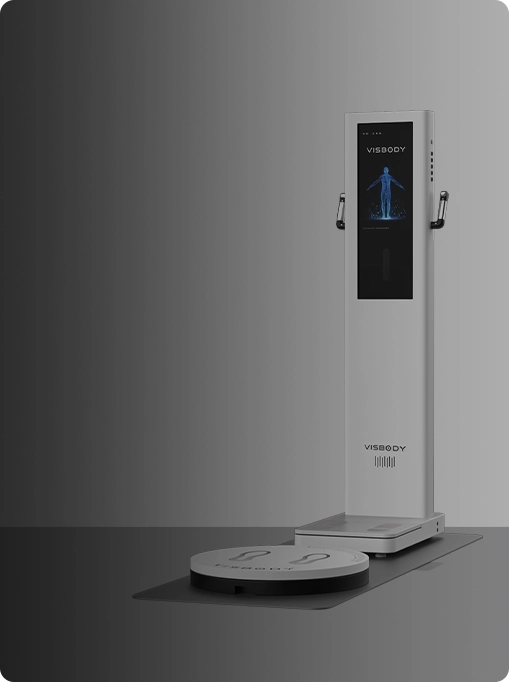
However, body assessment needs professional assistance. For this, you need to get help from advanced technological devices such as the Visbody 3D body scanner. Using this scanner machine, you can track changes, visualize progress and get tailored treatment plans. Here’s how Visbody helps in body assessment pre-exercise:
- Instant Body Scanning
Visbody body scanner device works on the simple yet basic methodology of scanning the person’s full body under examination. Using the multi-fusion dynamic reconstruction technology, a complete body scan is performed in 32 seconds.
- Measuring Body Composition Metrics
After Visbody’s body fat analyzer has completed its 360-degree view around the body, it assesses all the key body components. This ensures that you get accurate measurements of every metric under analysis. For instance, it shows net and standard values of your muscle mass, body weight, and total body composition, including protein, salts, and water.
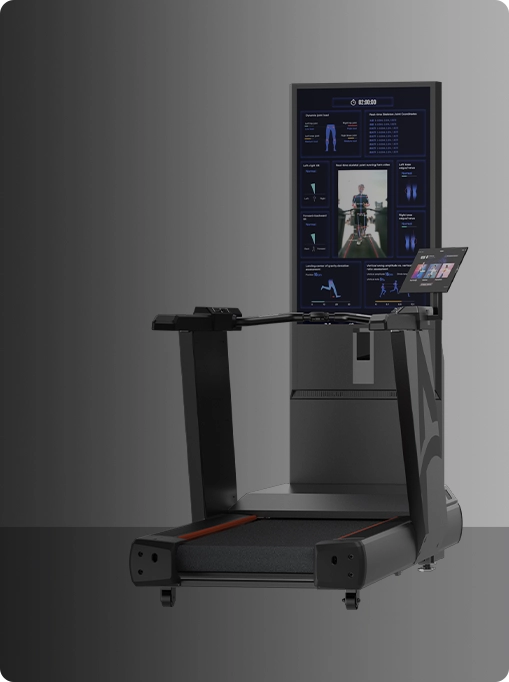
Another amazing benefit of the Visbody scanner is its ability to generate precise measurements within a short span. It can assess your posture and body movements with millimetre-level accuracy in less than a minute.
- Generating Reports
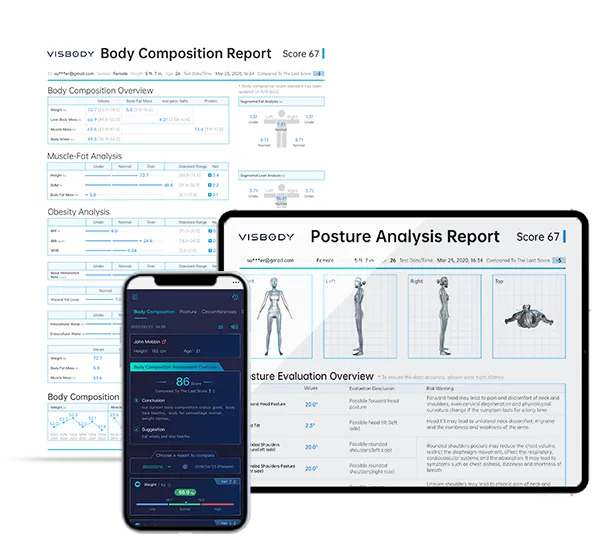
Once the body composition analyzer has measured all key components with their total and net percentages, it takes one step ahead and generates results. You get three different types of physical examination reports showing all your body components in a list. Hence, you can easily track your progress by carefully examining the fat and muscle percentages on the sheets.
With the Visbody body fat calculator machine, you can get an in-depth, three-dimensional vision of yourself with full digital results. It will display your core body composition in three types of physical test reports so you can analyze your weight loss progress more easily.
- Providing Training Plans
The next and final step is to help with specific trainingt plans. Using the Visbody body fat machine, nutritionists can easily plan a diet chart or weight loss treatment considering the health condition of their clients. For instance, if the scanner machine shows a lower percentage of muscle, the nutritionists can make a diet plan to gain muscles and lose fats.
Common Injuries from Returning to Exercise Too Quickly
When you return to regular exercise, you’re overmotivated and want to push harder to gain muscles. However, this over-excitement can result in potential injuries and increase the risk of health complications. Athletes and individuals who return to exercise too quickly can have a greater chance of soft tissue injuries from overtraining. Here are some common injuries that can occur from overtraining or overexercising:
- Knee strain
- Sprained ankle
- Hip injuries
- Groin pull
- Elbow pain
- Fractures
Besides, you can also suffer from shin split and inflammation of the tendons. This is because overtraining puts a strain on the body and puts pressure on the muscles and joints, which can cause various injuries. It can also cause small cracks in the bones, typically in weight-bearing bones like the tibia (shinbone), metatarsals (foot bones), or femur (thigh bone). Improper lifting techniques can also cause severe pain in lower back, shoulders, or knees.
How to Safely Return to Exercise
To avoid the risk of injuries and illness, the best way is to return to exercise safely. Don’t overdo it, and show some patience. Completely evaluate your body using advanced tools like the Visbody 3D scanner and check your health status before restarting. Here are some effective tips to help you with the process:
- Start Slow
The first and most important tip is to take a slow start. Begin with low-intensity exercises such as walking, gentle yoga, or stretching. Healthcare experts advise to begin at 50-70% of your original intensity to avoid injury. For instance, you can start with short workout sessions, such as 10 to 20 minutes, and slowly increase the duration.
- Gradual Progression
Once you have taken a start, slowly increase the intensity of your workout. You can also increase the duration and frequency of your gym sessions for better results. However, don’t do it quickly. Follow the 10% rule: increase your exercise volume by no more than 10% per week. Then, add a variety of workout sessions such as balance cardio, strength training, and flexibility exercises. This will reduce the risk of injuries and help you safely return to the regular exercise routine.
- Monitor your Progress
Another important tip is to monitor your progress over time. Keep track of your workout intensity, frequency and duration to get the best results. Look at your exercise patterns and make adjustments when needed. For instance, you can combine different exercises and check the recovery rates. This will help in better evaluation of the overall health and fitness.
Summarized: Tips to Maintain Fitness During Future Breaks
Now that you’ve got a detailed guide on returning safely from your exercise break, it’s time to plan ahead. You can pre-schedule your future breaks to avoid further risk of injuries. For this, it is advised to set achievable fitness goals that fit your current situation. Plan shorter workouts if time is limited. Use technological devices such as the Visbody 3D scanner to track your progress and monitor changes over time. Overall, stay hydrated and choose a healthy meal to maintain fitness during future breaks.