
Table of Contents
Introduction
The pursuit of optimal well-being in today’s health-conscious society goes beyond weight management. To achieve holistic wellness, it is essectial to comprehend the critical relationship that exists between health and core body circumference. Measurements of the arm, calf, and waist circumferences are important markers of general health and fitness levels.
The development of 3D body scanners and body composition analyzers, made possible by technological developments, has completely changed how we evaluate our physical health. With the use of these cutting-edge instruments, people may precisely monitor changes in their body’s overall form, muscle mass, and body fat percentage.
In this blog, we will explore the significant relationship between body circumference and health, such as arm, calf, and waist measurements on general health as well as how utilizing body scan equipment and body composition analyzers may completely transform your approach to fitness and vitality.
Mid-Waist Circumference and Health
The mid-waist circumference is a significant indicator of visceral fat gain, raising the risk of metabolic disorders and cardiovascular diseases. Visceral fat, which surrounds internal organs, differs from subcutaneous fat found beneath the skin and poses unique health risks.
This measure often correlates with increased visceral fat, which is intricately linked to insulin resistance—a key factor in type 2 diabetes. The secretion of inflammatory compounds by visceral fat leads to chronic inflammation, which serves as a precursor to various cardiovascular conditions.
Research has established a strong link between mid-waist circumference and the likelihood of developing type 2 diabetes and cardiovascular diseases. Higher measurements are closely associated with insulin resistance and dyslipidemia, two conditions that significantly raise the risk of cardiovascular incidents.
Moreover, mid-waist circumference serves as an accurate marker of abdominal obesity, which contributes to metabolic syndrome. This syndrome, characterized by insulin resistance, hypertension, and dyslipidemia, is directly linked to an excess of abdominal fat. Monitoring mid-waist circumference is essential for analyzing visceral fat buildup and identifying metabolic health risks. Addressing abdominal obesity through dietary modifications and regular exercise can reduce these risks, improving long-term health and well-being.
The Significance of Calf Circumference
Though it’s sometimes disregarded in conventional health evaluations, calf circumference provides important information about cardiovascular risk and skeletal muscle composition. A complete picture of a person’s health profile can be obtained by comprehending the relevance of calf circumference.
Calf Circumference and Skeletal Muscle Content
A good measure of the amount of skeletal muscle in the lower limbs is the calf circumference. Skeletal muscle is essential for mobility, metabolism, and general functional ability. Higher skeletal muscle content is generally seen in those with larger calf circumferences, and this is linked to better metabolic health and functional ability.
Healthcare providers can evaluate skeletal muscle health and identify those at risk of sarcopenia—a gradual loss of muscle mass and function that is frequently associated with aging—by taking a patient’s calf circumference. Targeted therapies, such as resistance training and nutritional support, can be used to preserve muscle mass and function in cases of early sarcopenia, hence improving quality of life and independence.
Calf Circumference and Cardiovascular Risk
In addition to its correlation with the amount of skeletal muscle, calf circumference has implications for cardiovascular health. Studies reveal an inverse relationship between calf circumference and cardiovascular risk factors like dyslipidemia and hypertension. Larger calves are associated with lower blood pressure and better lipid profiles, which lessen the risk of cardiovascular events.
Moreover, calf circumference could be a sign of healthy peripheral veins. Reduced calf circumference is linked to endothelial dysfunction and decreased peripheral blood flow, two factors that are predictive of cardiovascular disease.
In conclusion, calf circumference offers important information on the amount of skeletal muscle and cardiovascular risk. Healthcare practitioners can obtain a more thorough picture of a patient’s health state and carry out focused interventions to enhance general health and well-being by adding calf circumference measures into routine health exams.
Arm Circumference as a Health Marker
Detection of Liver Diseases
Relationship with Calf Circumference
Studies indicate a noteworthy association between the circumferences of the arms and legs, which mirrors the distribution of fat and total muscle mass. People who have balanced calf and arm circumferences are less prone to develop chronic illnesses and have positive metabolic profiles.
Advanced Techniques for Measuring Core Body Circumference
Traditional Tape Measurement Approach
Traditional methods of measuring core body circumferences, such as the waist, calf, and arm, involve using a flexible tape measure. This approach requires meticulous attention to detail to ensure accuracy. The process involves positioning the tape at specific landmarks on the body—midway between the shoulder and elbow for the arm, the narrowest point of the waist, and the widest part of the calf. While this method can provide basic measurements, it can be cumbersome and prone to errors due to inconsistencies in tape placement and tension. Additionally, manual recording of these measurements can be tedious and prone to inaccuracies over time, especially if used for tracking changes in body size due to health regimes or weight loss programs.
Innovative 3D Body Scanning with the M30
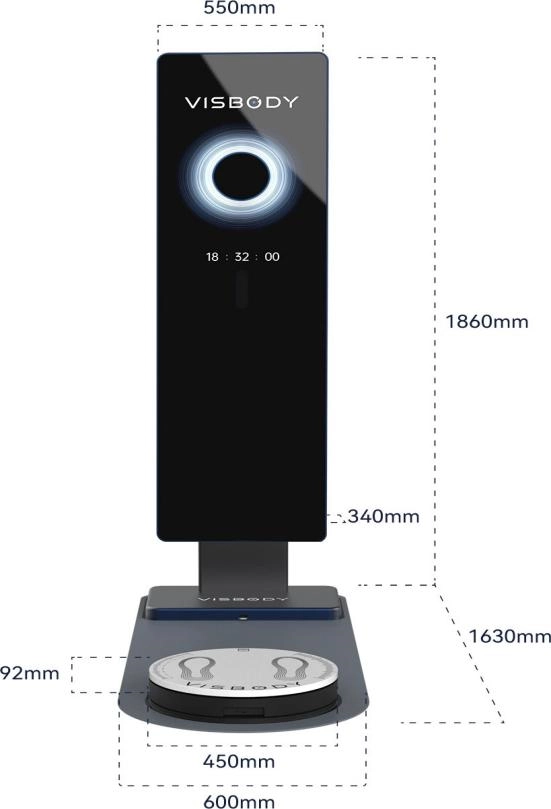
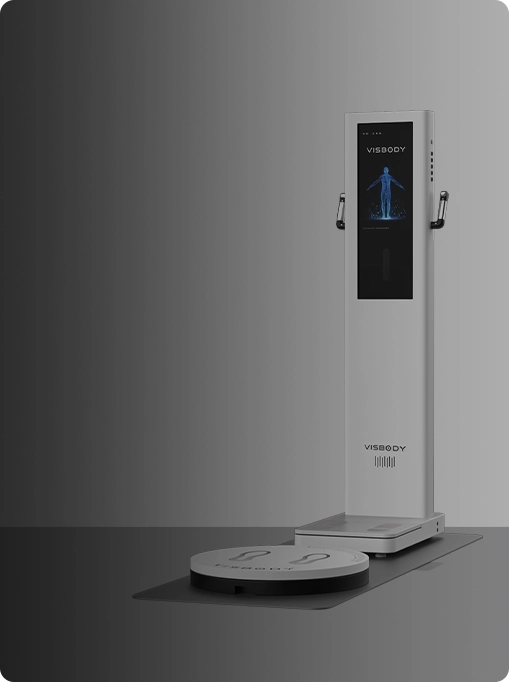
In contrast, the M30 3D body scanning mirror offers a revolutionary advancement in measuring core body circumferences. This state-of-the-art device utilizes high-precision scanning technology to create a detailed 3D model of the body in just 32 seconds. By simply standing on the turntable, users are rotated to capture comprehensive data with millimeter-level precision, providing a more accurate and repeatable assessment of body dimensions. This method not only simplifies the measurement process but also enhances the ability to monitor changes over time, making it an invaluable tool for professionals in health and fitness industries. The M30’s capabilities allow for a seamless integration of precise body measurements into personalized health and fitness plans, streamlining the process and ensuring that interventions are tailored to the individual’s specific body metrics.
Integrating Body Circumference Measurements into Health Assessments
Assessment of Adiposity Distribution
Detection of Metabolic Disorders
Risk Stratification and Disease Prevention
Discover Our Solutions
Conclusion
In summary, incorporating body circumference measurements into health assessments enhances their precision and effectiveness. This allows for early identification of potential health hazards and the development of targeted interventions, ultimately leading to improved health outcomes, ranging from the waist circumference, which predicts metabolic health, to the arm and calf circumferences, which reveal information about the distribution of muscle mass. Healthcare practitioners can detect possible health hazards early and use focused measures to mitigate them by integrating body circumference measurements into routine health exams. In the end, visit visbody to learn how to interpret and keep track of body circumference measurements enables people to take proactive measures to improve their health and fend against chronic illnesses.