
As many people traverse their fitness journey, it often occurs to them, how much is too fit? An individual with a thin, sleek body might be considered the epitome of fitness, or someone very muscular can be deemed fit. However, this is far from the truth.
Someone who is highly buff might have a compromised cardiovascular function, and someone who is super thin and lean could have weak bones and mineral deficiencies. Therefore, being physically fit means an individual with an excellent functioning body, every health parameter in range, and an excellent standardized weight according to height.
Table of Contents
Why Is Measuring Physical Fitness Important?
Anyone wanting to get in shape must know which parameters their body lacks so that they can focus on those particular areas. Improving overall health and wellness can only be achieved once an individual gets trained in the right direction. Moreover, physical fitness is directly correlated to one’s health; the more physically fit an individual is, the more likely they are to fall sick and be surrounded by disease.
Therefore, keeping your health your number one priority is critical. Assessing how fit you actually are is the first step in improving your body. Measuring physical fitness can directly aid in alleviating many diseases and promoting health at the same time.
Health-Related Fitness vs. Sport-Related Fitness
The components of fitness assessment are divided into two main categories: health-related Fitness and sports-related Fitness.
Further division is described as follows;
Health-related physical fitness
As the name implies, health-related physical fitness focuses on how well all the organ systems work. This is directly measured to give a symbolic analysis. Anyone in good health will have stable blood pressure, pulse rate, respiratory rate, etc. These factors play a huge role in reducing inflammation and saving the body from the many chronic diseases and fatigue that develop over time. People who take care of their bodies can feel less tired and more energetic even after a long day of work.
The parameters through which health-related physical fitness is assessed are as follows;
- Cardiorespiratory Health
- Muscular strength
- Muscular endurance
- Flexibility
- Body Composition
Sports related fitness
Sports-related fitness is based on the physical attributes that are needed for athletes and professionals. These skills are acquired and perfected through practice and are mentioned as follows;
- Speed
- Power
- Balance
- Coordination
- Reaction time
These two different types of fitness significantly impact every individual’s life. Needless to say, both are equally important. However, anyone who is able to achieve success with even one can lead a life with fewer health issues and more energy to spend.
There are two groups: one who wishes to get on top of their health and others who want to train to be better athletes and sportspeople. Health-related fitness targets the former, and skill/sports-related fitness targets those who want to improve their performance in their particular sport. Since the focus points of both components differ, their training methods are also different. Exercises recommended solely to enhance cardiac health can target middle-aged people, whereas increasing agility and reaction time can have specific exercise regimens that can significantly benefit professional athletes.
Both have benefits, and both come with a different set of results; therefore, in order to know where an individual’s key focus is related to their fitness journey, it is incredibly vital to know what they want to achieve in the get-go before jumping on to the bandwagon of getting fit.
Tracking Your Physical Fitness Progress
There are many methods through which fitness progress can be tracked. The first can be by timing oneself before starting any exercise regimen. The longer it takes to get tired and break a sweat can be used to monitor progress. Moreover, anyone wishing to lose weight can focus on running on the treadmill and burn off calories; this can also be tracked with the help of a weight machine and keeping a track record of it every few days.
These simple home assessments can help track one’s progress by working out. However, athletes who need to be on the brink of fitness require more than the conventional methods. Their activities are logged into a system to analyze how much they have improved and how effective their training program is. Many sports clinics use advanced technology to record data, such as having that individual run on a treadmill with multiple electrodes attached to their body, which can help read all their values easily.
Methods of Physical Fitness Analysis
Following is the list of methods through which physical fitness is assessed;
- Cardiorespiratory Health: It is directly related to an individual’s ability to perform high-end exercises without getting tired. These high-intensity workouts revolve around the cardiovascular, the respiratory, and the skeletal system. How this works is that once the body starts moving, the skeletal muscles require more oxygen to work; the healthier a person is, their muscles are less likely to get oxygen depleted fast and will be able to continue with that motion for a long time before their respiratory centers have to overwork and fulfill that demand of oxygen to the cells. The value obtained by maximal oxygen uptake is measured as Vmax, and it helps determine how easily one reaches Vmax to decide how well their Cardiorespiratory endurance is.
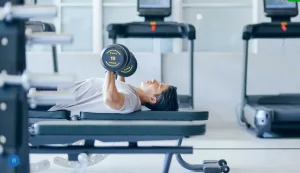
- Muscular strength is the value obtained by muscles exerting force over a short period. It is measured by many devices, namely dynamometers or tensiometers. Resistance is applied to the muscles increased with time to see how much strength those muscles have to overcome that resistance. The last measurement that the muscle group can withhold is recorded and measured.
- Muscular endurance is measured by noting how much the muscle can work by repetitive contractions without getting tired. For instance, a person’s maximum number of push-ups or pull-ups is related to muscle endurance.
- Flexibility is determined by the ability of the body’s joints to move efficiently within its range of motion. Specific instruments, such as goniometers or inclinometers, are needed to measure joint flexibility.
- Body Composition- The measurement of the percentage of fat to protein is what body composition generally stands for. However, it can also be determined by measuring the body mass index of a person as well as the waist-to-hip ratio.
- Speed is measured by how fast a person can run for a specific duration. Good speed determines the distance covered in the shortest time.
- Power is calculated by the rate at which energy is exerted with maximal force. Vertical Jump test is one of the ways through which power can be assessed.
- Balance is measured by a person’s ability to stay in one line without support. Their whole balance depends on their muscle strength, swinging them to body weight, and maintaining their weight at a specific time without falling.
- Coordination is the ability through which more than one sense can work together to perform well physically. It is assessed through the alternate handball wall test.
- Reaction time—Any good athlete should have a good reaction time to do well in the sport they are participating in. It is assessed in a number of ways, one of which is the Drop Ruler Test. [1][2]
Utilizing T30 for Comprehensive Physical Fitness Analysis
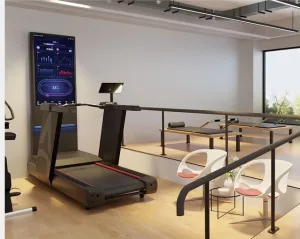
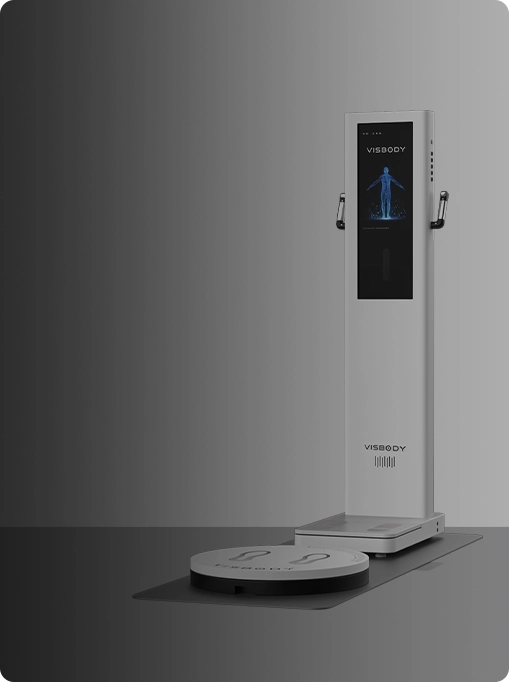
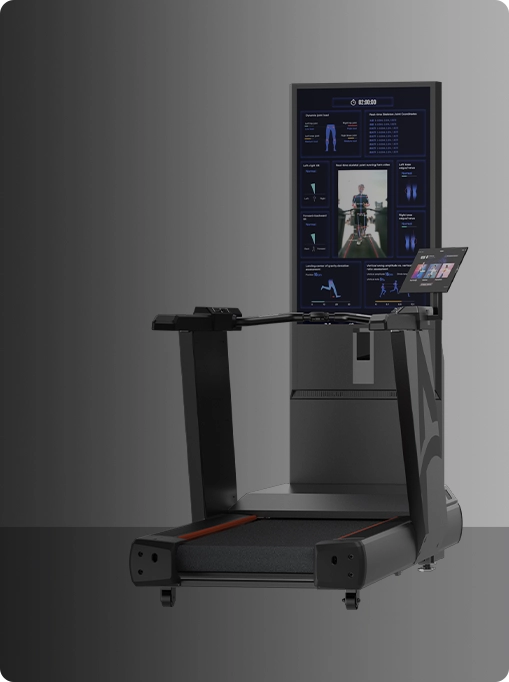
T30 is a futuristic innovation that calculates the many different attributes that determine all the fitness parameters efficiently. It is smart digital equipment that can record all the physical fitness components and generate a well-documented analysis report stating where the body lagged and where it excelled.
All one needs to do to get their assessment done is follow all the instructions and perform exercises that the intelligent dynamic physique assessor and trainer can detect. All the data is then collected, and a report is generated. It can calculate the following components;
- Upper limb strength
- Lower Limb Strength
- Core strength
- Flexibility
- Balance ability
- One-minute situp performance
- One-minute pull-up performance
- Reaction time
- Vertical jump
Once all the data is collected, T30 helps understand the body’s weak points and then gives specifications for how it can be improved. This can be done by recommending different exercise or diet plans that can help the individual achieve their desired body type.
How to Improve Your Physical Fitness
There are a lot of ways through which one can stay physically fit and healthy. The easiest way is by simply moving. All body muscles require action to keep active, which can only be achieved if a person takes up exercising regularly. These exercises can center around whatever is best for their body’s needs. Moreover, one can also opt for other ways to stay physically fit, such as going for a walk, swimming for at least 20 minutes every day or two, or going for a jog or cycling.
All of these physical activities not only help the body stay in shape by burning off calories but also do a great deal by eliminating a lot of waste products from the body through sweat. Those who cannot find time to go for long walks can always join a gym where they can be assessed and assisted professionally.[3]
References
- MediLexicon International. (n.d.). Fitness: Definition, factors, and types. Medical News Today
- Physical fitness and its components. Physiopedia. (n.d.).
- What is physical fitness? Human Kinetics. (n.d.).