
Indholdsfortegnelse
Hvad er balance?
Balance refererer til tilstanden af ligevægt eller stabilitet opnået, når forskellige elementer er i korrekt proportion eller harmoni. Det er betingelsen for at have en ligelig fordeling eller arrangement af vægt, antal, eller vigtighed. Balance er evnen til at holde kroppens massecenter på linje med dens støtte.
Samspillet mellem sansesystemerne (såsom vision, det vestibulære system, og proprioception) og bevægeapparatet er indviklet og mangefacetteret (Horak, 2006). Optimal ligevægt letter sømløs og effektiv bevægelse, samtidig med at risikoen for fald og skader mindskes. (Shumway-Cook & Woollacott, 2007).
Betydningen af balance
Et overblik
Ligevægt er afgørende for omfattende fysisk sundhed og generel velvære. It affects all aspects of our everyday life, ranging from basic activities such as walking and climbing stairs to more intricate pursuits like sports and dance. Balance is crucial for several reasons:
– Movement Efficiency: Optimal balance facilitates efficient locomotion, preserving energy and augmenting performance in physical endeavors. Athletes and individuals involved in physical activities derive significant advantages from possessing a highly developed sense of balance, as it enables them to perform motions with enhanced accuracy and less exertion. Efficient movement leads to enhanced performance and endurance, as the body can function more efficiently with less energy consumption (Guskiewicz & Perrin, 1996).
– Forebyggelse af skader: Maintaining proper balance decreases the likelihood of falls and associated injuries, et spørgsmål af særlig betydning for ældre individer. Blandt de ældre, fald er en fremtrædende kilde til skade, ofte resulterer i alvorlige komplikationer såsom frakturer.
Forbedring af balancen kan reducere sandsynligheden for sådanne hændelser væsentligt, dermed fremme øget autonomi og livskvalitet for ældre individer. Ud over, at have en stærk balance kan hjælpe med at minimere sportsskader ved at forbedre evnen til at kontrollere bevægelser og minimere sandsynligheden for bommerter og akavede landinger (Sherrington et al., 2008).
– Holdning og stabilitet: Balance forbedrer korrekt justering og fasthed, dermed afbøde forekomsten af ubehag i ryggen og andre muskuloskeletale lidelser. Utilstrækkelig ligevægt kan resultere i kompenserende bevægelser og stillinger, der udøver for stort pres på kroppen, resulterer i vedvarende smerter og ubehag. For at minimere chancerne for at pådrage sig muskuloskeletale problemer, individer kan opnå en ideel kropsholdning ved at opretholde den rette balance (Gribble & Hertel, 2003).
– Samordning: Forbedret ligevægt forbedrer koordinationen, behændighed, og nøjagtighed i bevægelser. Dette er ikke kun fordelagtigt for atleter, men også for andre, der søger at forbedre deres generelle fysiske præstation. Forbedret koordination har potentialet til at forbedre ydeevnen i både sport og daglige aktiviteter, resulterer i øget lethed og effektivitet af opgaver (Bikube & sarabon, 2010).
Betydningen af balancevurdering
Evaluering af ligevægt er afgørende for at opdage mulige problemer og tilpasse passende indgreb. Balancevurdering hjælper med:
– Identifikation af svagheder: Det hjælper med at identificere ubalancer, som måske ikke umiddelbart er synlige under almindelige daglige aktiviteter. Timely detection of balance issues can provide prompt intervention and avert additional consequences. For eksempel, slight equilibrium problems may go unnoticed during regular movements but can become evident during particular balance assessments (Horak, 2006).
– Sporing af fremskridt: Consistent evaluation can track advancements or setbacks in equilibrium, providing guidance for modifications in training. This is especially crucial for persons who are undergoing rehabilitation or those who have progressive diseases that impact their equilibrium. Healthcare practitioners can optimize treatment programs for their patients by monitoring progress and making necessary adjustments (Shumway-Cook & Woollacott, 2007).
– Personlig træning: The results obtained from balance tests enable the tailoring of training programs to target specific requirements. Customized programs guarantee that people receive the most efficient therapies for their distinct balance difficulties. For eksempel, an individual experiencing problems with their vestibular system may need to perform distinct workouts compared to someone who has difficulties in proprioception (Guskiewicz & Perrin, 1996).
Fordele ved balancetræning
Balance training provides a multitude of advantages for people at any level of fitness and age. Dr. Michael Smith asserts that balance training confers advantages to individuals across all skill levels, ranging from novices to elite athletes, as well as those with diverse medical issues. Here are several distinct advantages:
– Builds Overall Strength: Balance training is beneficial for beginners as it aids in developing fundamental strength and primes the body for more advanced workouts. Participating in balance exercises stimulates multiple muscle groups, fostering comprehensive muscular growth. The development of this fundamental strength is essential for executing more intricate exercises with safety and efficiency (Bikube & sarabon, 2010).
– Challenges Advanced Exercisers: Even basic workouts that focus on balance can provide a significant challenge to individuals who are experienced in their fitness regimen, introducing a fresh element to their practice. These exercises can bring diversity and intricacy, which helps to avoid the repetition of workouts and encourages ongoing progress.
Experienced individuals that engage in advanced exercise can derive advantages from balancing training, which promotes neuromuscular adaptations and improves their overall performance (Gribble & Hertel, 2003).
– Support Health Conditions: Balancetræning forbedrer muskelstyrken og giver støtte til at lindre gener i leddene, så hjælpe med håndteringen af sundhedstilstande såsom gigt, diabetes, og hjertesygdomme.
Balanceøvelser kan give væsentlig lindring og øge livskvaliteten for patienter med forskellige sygdomme. Ifølge Sherrington et al. (2008), styrkelse af musklerne omkring smertefulde led kan mindske ubehag og forbedre ledstabiliteten, hvilket resulterer i øget lethed og reduceret smerte under regelmæssige aktiviteter.
– Til gavn for gravide: Gravide kvinder kan drage fordel af nøje udvalgte balanceøvelser, da de kan øge stabiliteten og reducere risikoen for fald. Graviditetstilstanden kan ændre en kvindes ligevægt og påvirke hendes evne til at holde balancen, thus making it imperative to engage in targeted activities to preserve stability.
Engaging in balance training while pregnant can help reduce the potential dangers linked to alterations in body mechanics, thereby fostering a pregnancy that is both safer and more comfortable (Garrard et al., 2013).
Hvem har brug for det - Yderligere perspektiver af Dr. Michael Smith
Balance training is not exclusive to any particular demographic; it confers advantages to a diverse array of individuals:
-Begyndere: Facilitates the development of fundamental strength and improves general physical fitness. Commencing a fitness endeavor by incorporating balance training can result in improved outcomes and decreased susceptibility to injuries. Novice individuals have the ability to establish a strong base that equips them for more intricate physical activities (Guskiewicz & Perrin, 1996).
– Avancerede atleter: Enhances the intricacy and difficulty of training, fostering ongoing progress. Balance training can give advanced athletes with improved proprioception and neuromuscular control, leading to benefits in their performance. Integrating balancing exercises into one’s regular training regimen can result in enhanced performance in their respective athletic disciplines (Bikube & sarabon, 2010).
Individuals with health conditions: Enhances muscular strength and provides support to the joints, hence enhancing functional ability and overall quality of life. Balance training is an essential element of the management plan for persons with chronic illnesses. Ifølge Sherrington et al. (2008), it has the potential to alleviate symptoms and enhance overall physical function.
– Pregnant women: De kan øge deres stabilitet og reducere risikoen for fald ved at deltage i specifikt udvalgte øvelser. Engaging in balance training while pregnant can help reduce the potential dangers linked to alterations in body mechanics. Gravide kvinder kan øge deres stabilitet og minimere risikoen for fald, derfor fremme en sundere graviditet (Garrard et al., 2013).
Sådan testes balanceevnen (Almindelige metoder)
Forskellige teknikker kan anvendes til at evaluere en persons evne til at opretholde ligevægt. Nedenfor er mange ofte stødte eksempler:
1. Enkeltbens holdning: Opretholdelse af balance på et enkelt ben uden ekstern støtte, så længe det er muligt. Denne ligefremme vurdering kan afsløre væsentlig indsigt i en persons ligevægtsevner. Denne aktivitet tester de proprioceptive og vestibulære systemer, som hjælper med at vurdere ens evne til at bevare balancen (Shumway-Cook & Woollacott, 2007).
2. Lukkede øjne: Stå med lukkede øjne for at fjerne visuelle stimuli og teste ligevægt. Depriving the body of visual input increases the reliance on proprioception and vestibular input, resulting in a more thorough evaluation of balance. This examination can effectively identify shortcomings that may not be evident when relying on visual indicators (Horak, 2006).
3. Dynamic Balance Tests: This involve executing actions such as walking in a straight path or maintaining equilibrium on an unstable surface. These assessments simulate real-world scenarios and offer insight into an individual’s ability to maintain balance during dynamic tasks. They are especially valuable for evaluating equilibrium in athletes and persons who are physically active (Guskiewicz & Perrin, 1996).
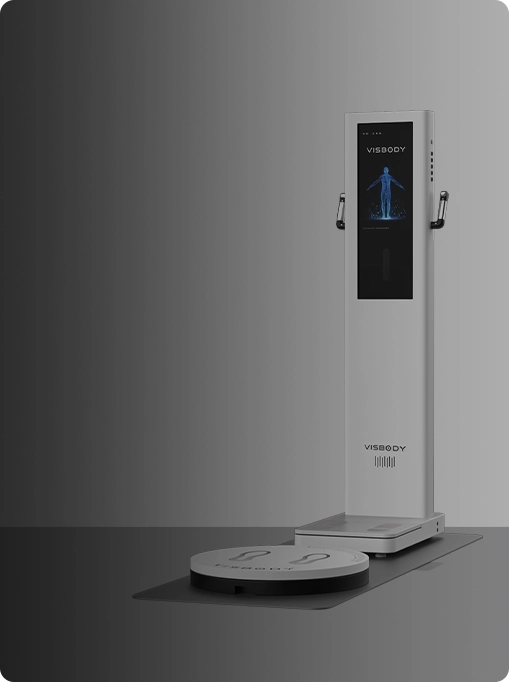
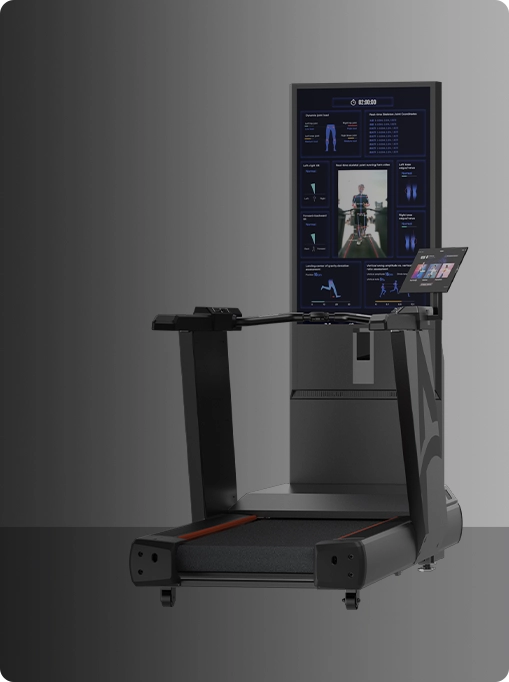
4. The Visbody T30: This offers a dynamic physical fitness assessment using AI visual recognition technology. The Visbody T30 provides comprehensive analysis of an individual’s equilibrium and total physical state, rendering it a handy instrument for both evaluation and exercise. This advanced technological method can offer accurate measurements and comprehensive data, assisting in the creation of focused training programs (Treleaven & Wells, 2007).
Simple balanceøvelser til at udføre derhjemme
Enhancing balance does not necessarily necessitate the use of complex apparatus. Below are a few uncomplicated workouts that can be performed within the confines of one’s home:
– Heel-to-Toe Walk: Walking in a linear manner, where the heel of one foot is positioned directly in front of the toes of the other foot. This workout enhances balance and coordination, facilitating improved mastery of motions. One approach to make it more difficult is by raising the velocity or doing it on an irregular surface (Shumway-Cook & Woollacott, 2007).
– Single Leg Stand: Maintain balance by standing on one leg for an extended period, progressively increasing the length of time. This exercise enhances the muscular strength required for maintaining balance and improves proprioception. Introducing additional actions, such as elevating the opposite leg to a greater extent or altering its trajectory, might enhance the level of challenge (Gribble & Hertel, 2003).
– Balance on an Unstable Surface: Utilizing a balance board or a cushion to maintain equilibrium while executing subtle motions. This introduces a factor of instability, compelling the body to activate additional muscles in order to sustain balance.
According to Panjan and Sarabon (2010), øvelser såsom squats eller lunges kan udføres på en ustabil overflade for at øge vanskeligheden ved at opretholde balance og stabilitet.
-Tai Chi: Engagerer sig i udøvelse af Tai Chi, en kampsport karakteriseret ved dens bevægelser, der fremmer balancen. Tai Chi er en praksis, der involverer langsomme og bevidste bevægelser sammen med dyb vejrtrækning.
Det hjælper med at øge både fysisk og mental ligevægt. Tai Chi-øvelser kan resultere i væsentlige forbedringer i balance og overordnet velvære (Sherrington et al., 2008).
Konklusion
Balance er en væsentlig komponent i fysisk kondition, som har en væsentlig indflydelse på vores daglige liv og generelle sundhedstilstand. Udførelse af balancetest og træning er afgørende for at identificere mulige problemer, undgå skader, og forbedre den fysiske præstation.

Referencer
-Gribble, P. EN., & Hertel, J. (2003). Considerations for normalizing measures of the Star Excursion Balance Test. Measurement in Physical Education and Exercise Science, 7(2), 89-100.
– Garrard, JEG., Cresswell, EN., & Williams, M. EN. (2013). Pregnancy and physical activity: A complex relationship. Physical Therapy Reviews, 18(4), 261-268.
– Guskiewicz, K. M., & Perrin, D. H. (1996). Research and clinical applications of assessing balance. Journal of Sport Rehabilitation, 5(1), 45-63.
– Horak, F. B. (2006). Postural orientation and equilibrium: What do we need to know about neural control of balance to prevent falls? Alder og aldring, 35(Suppl 2), ii7-ii11.
– Bikube, EN., & sarabon, N. (2010). The effects of a 6-week neuromuscular training program on multi-joint movement performance. Journal of Strength and Conditioning Research, 24(12), 3322-3332.
– Sherrington, C., Tiedemann, EN., Fairhall, N., Close, J. C. T., & Lord, S. R. (2008). Exercise to prevent falls in older adults: An updated meta-analysis and best practice recommendations. New South Wales Public Health Bulletin, 19(3-4), 78-83.
– Shumway-Cook, EN., & Woollacott, M. H. (2007). Motor control: Translating research into clinical practice (3rd ed.). Philadelphia: Lippincott Williams & Wilkins.
– Treleaven, J., & Wells, EN. (2007). Use of the vestibular system in assessing balance. Journal of Anxiety Disorders, 21(4), 572-581.
– Winter, D. EN. (1995). Human balance and posture control during standing and walking. Gang & Positur, 3(4), 193-214.