Inhaltsverzeichnis
Was ist Gleichgewicht??
Gleichgewicht bezieht sich auf den Zustand des Gleichgewichts oder der Stabilität, der erreicht wird, wenn verschiedene Elemente im richtigen Verhältnis oder in der richtigen Harmonie stehen. It is the condition of having an equal distribution or arrangement of weight, quantity, or importance. Balance is the capacity to keep the body’s center of mass aligned with its base of support.
The interaction between the sensory systems (such as vision, the vestibular system, und Propriozeption) and the musculoskeletal system is intricate and multifaceted (Horak, 2006). Optimal equilibrium facilitates seamless and effective locomotion while also mitigating the risk of falls and injuries. (Shumway-Cook & Woollacott, 2007).
The Importance Of Balance
An Overview
Equilibrium is crucial for comprehensive physical health and general well-being. It affects all aspects of our everyday life, ranging from basic activities such as walking and climbing stairs to more intricate pursuits like sports and dance. Balance is crucial for several reasons:
– Movement Efficiency: Optimal balance facilitates efficient locomotion, preserving energy and augmenting performance in physical endeavors. Athletes and individuals involved in physical activities derive significant advantages from possessing a highly developed sense of balance, as it enables them to perform motions with enhanced accuracy and less exertion. Efficient movement leads to enhanced performance and endurance, as the body can function more efficiently with less energy consumption (Guskiewicz & Perrin, 1996).
– Verletzungsprävention: Maintaining proper balance decreases the likelihood of falls and associated injuries, a matter of particular importance for older individuals. Among the elderly, falls are a prominent source of injury, frequently resulting in severe complications such fractures.
Enhancing balance can substantially reduce the probability of such occurrences, hence fostering increased autonomy and quality of life for elderly individuals. Zusätzlich, having strong balance can assist minimize sports injuries by enhancing the ability to control movements and minimizing the likelihood of blunders and awkward landings (Sherrington et al., 2008).
– Posture and Stability: Balance enhances proper alignment and firmness, hence mitigating the occurrence of back discomfort and other musculoskeletal ailments. Insufficient equilibrium can result in compensatory movements and postures that exert excessive pressure on the body, resulting in persistent pain and discomfort. To minimize the chances of acquiring musculoskeletal issues, individuals can achieve an ideal posture by maintaining proper balance (Gribble & Hertel, 2003).
– Koordinierung: Enhanced equilibrium improves coordination, dexterity, and accuracy in motions. This is advantageous not only for athletes but also for others seeking to enhance their general physical performance. Improved coordination has the potential to enhance performance in both sports and daily activities, resulting in increased ease and efficiency of tasks (Panjan & Sarabon, 2010).
Importance Of Balance Assessment
Evaluating equilibrium is essential for detecting possible problems and customizing suitable interventions. Balance assessment aids in:
– Identifying Weaknesses: It aids in the identification of imbalances that may not be readily apparent during regular daily activities. Timely detection of balance issues can provide prompt intervention and avert additional consequences. Zum Beispiel, slight equilibrium problems may go unnoticed during regular movements but can become evident during particular balance assessments (Horak, 2006).
– Fortschritt verfolgen: Consistent evaluation can track advancements or setbacks in equilibrium, providing guidance for modifications in training. This is especially crucial for persons who are undergoing rehabilitation or those who have progressive diseases that impact their equilibrium. Healthcare practitioners can optimize treatment programs for their patients by monitoring progress and making necessary adjustments (Shumway-Cook & Woollacott, 2007).
– Personalisiertes Training: The results obtained from balance tests enable the tailoring of training programs to target specific requirements. Customized programs guarantee that people receive the most efficient therapies for their distinct balance difficulties. Zum Beispiel, an individual experiencing problems with their vestibular system may need to perform distinct workouts compared to someone who has difficulties in proprioception (Guskiewicz & Perrin, 1996).
Benefits Of Balance Training
Balance training provides a multitude of advantages for people at any level of fitness and age. DR. Michael Smith asserts that balance training confers advantages to individuals across all skill levels, ranging from novices to elite athletes, as well as those with diverse medical issues. Here are several distinct advantages:
– Builds Overall Strength: Balance training is beneficial for beginners as it aids in developing fundamental strength and primes the body for more advanced workouts. Participating in balance exercises stimulates multiple muscle groups, fostering comprehensive muscular growth. The development of this fundamental strength is essential for executing more intricate exercises with safety and efficiency (Panjan & Sarabon, 2010).
– Challenges Advanced Exercisers: Even basic workouts that focus on balance can provide a significant challenge to individuals who are experienced in their fitness regimen, introducing a fresh element to their practice. These exercises can bring diversity and intricacy, which helps to avoid the repetition of workouts and encourages ongoing progress.
Experienced individuals that engage in advanced exercise can derive advantages from balancing training, which promotes neuromuscular adaptations and improves their overall performance (Gribble & Hertel, 2003).
– Support Health Conditions: Balance training improves muscle strength and provides support to alleviate discomfort in joints, so assisting in the management of health conditions such as arthritis, Diabetes, und Herzerkrankungen.
Balance exercises can offer substantial alleviation and enhance the quality of life for patients with various illnesses. According to Sherrington et al. (2008), strengthening the muscles surrounding painful joints can decrease discomfort and improve joint stability, resulting in increased ease and reduced pain during regular activities.
– Benefits pregnant women: Pregnant women can benefit from carefully selected balancing exercises, as they can enhance stability and reduce the risk of falls. The state of pregnancy can modify a woman’s equilibrium and impact her capacity to keep balance, thus making it imperative to engage in targeted activities to preserve stability.
Engaging in balance training while pregnant can help reduce the potential dangers linked to alterations in body mechanics, thereby fostering a pregnancy that is both safer and more comfortable (Garrard et al., 2013).
Who Needs It—Further Perspectives By Dr. Michael Smith
Balance training is not exclusive to any particular demographic; it confers advantages to a diverse array of individuals:
-Anfänger: Facilitates the development of fundamental strength and improves general physical fitness. Commencing a fitness endeavor by incorporating balance training can result in improved outcomes and decreased susceptibility to injuries. Novice individuals have the ability to establish a strong base that equips them for more intricate physical activities (Guskiewicz & Perrin, 1996).
– Fortgeschrittene Sportler: Enhances the intricacy and difficulty of training, fostering ongoing progress. Balance training can give advanced athletes with improved proprioception and neuromuscular control, leading to benefits in their performance. Integrating balancing exercises into one’s regular training regimen can result in enhanced performance in their respective athletic disciplines (Panjan & Sarabon, 2010).
Individuals with health conditions: Enhances muscular strength and provides support to the joints, hence enhancing functional ability and overall quality of life. Balance training is an essential element of the management plan for persons with chronic illnesses. According to Sherrington et al. (2008), it has the potential to alleviate symptoms and enhance overall physical function.
– Pregnant women: They can enhance their stability and reduce the risk of falls by engaging in specifically selected exercises. Engaging in balance training while pregnant can help reduce the potential dangers linked to alterations in body mechanics. Pregnant women can enhance their stability and minimize the risk of falls, therefore fostering a healthier pregnancy (Garrard et al., 2013).
How To Test Balance Ability (Common Methods)
Various techniques can be employed to evaluate an individual’s capacity for maintaining equilibrium. Below are many often encountered examples:
1. Single Leg Stance: Maintaining balance on a single leg without any external support for as long as feasible. This straightforward assessment can unveil substantial insights into an individual’s equilibrium capabilities. This activity tests the proprioceptive and vestibular systems, which helps assess one’s ability to maintain balance (Shumway-Cook & Woollacott, 2007).
2. Eyes Closed Stance: Standing with eyes shut to remove visual stimuli and test equilibrium. Depriving the body of visual input increases the reliance on proprioception and vestibular input, resulting in a more thorough evaluation of balance. This examination can effectively identify shortcomings that may not be evident when relying on visual indicators (Horak, 2006).
3. Dynamic Balance Tests: This involve executing actions such as walking in a straight path or maintaining equilibrium on an unstable surface. These assessments simulate real-world scenarios and offer insight into an individual’s ability to maintain balance during dynamic tasks. They are especially valuable for evaluating equilibrium in athletes and persons who are physically active (Guskiewicz & Perrin, 1996).
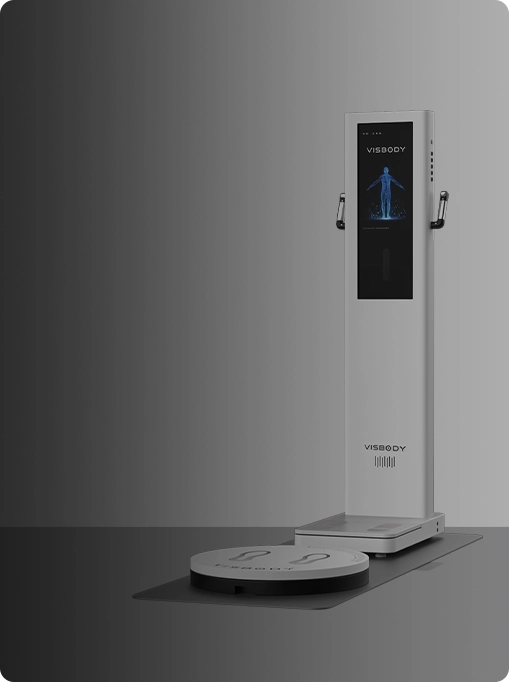
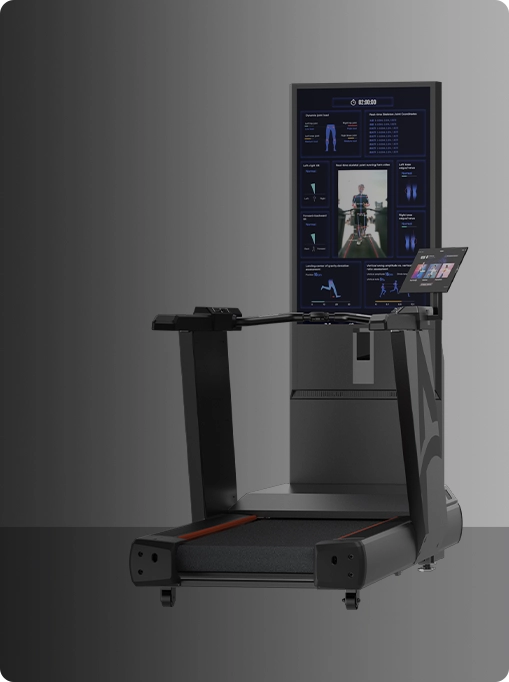
4. The Visbody T30: This offers a dynamic physical fitness assessment using AI visual recognition technology. The Visbody T30 provides comprehensive analysis of an individual’s equilibrium and total physical state, rendering it a handy instrument for both evaluation and exercise. This advanced technological method can offer accurate measurements and comprehensive data, assisting in the creation of focused training programs (Treleaven & Wells, 2007).
Simple Balance Exercises To Perform At Home
Enhancing balance does not necessarily necessitate the use of complex apparatus. Below are a few uncomplicated workouts that can be performed within the confines of one’s home:
– Heel-to-Toe Walk: Walking in a linear manner, where the heel of one foot is positioned directly in front of the toes of the other foot. This workout enhances balance and coordination, facilitating improved mastery of motions. One approach to make it more difficult is by raising the velocity or doing it on an irregular surface (Shumway-Cook & Woollacott, 2007).
– Single Leg Stand: Maintain balance by standing on one leg for an extended period, progressively increasing the length of time. This exercise enhances the muscular strength required for maintaining balance and improves proprioception. Introducing additional actions, such as elevating the opposite leg to a greater extent or altering its trajectory, might enhance the level of challenge (Gribble & Hertel, 2003).
– Balance on an Unstable Surface: Utilizing a balance board or a cushion to maintain equilibrium while executing subtle motions. This introduces a factor of instability, compelling the body to activate additional muscles in order to sustain balance.
According to Panjan and Sarabon (2010), exercises such as squats or lunges can be done on an unsteady surface to increase the difficulty of maintaining balance and stability.
-Tai Chi: Engaging in the practice of Tai Chi, a martial art characterized by its movements that promote balance. Tai Chi is a practice that involves slow and deliberate movements along with deep breathing.
It helps enhance both physical and mental equilibrium. Tai Chi practice can result in substantial enhancements in balance and overall well-being (Sherrington et al., 2008).
Abschluss
Balance is an essential component of physical fitness that has a significant impact on our daily lives and overall state of health. Conducting balance testing and training is crucial for identifying possible problems, avoiding injuries, and enhancing physical performance.

Verweise
-Gribble, P. A., & Hertel, J. (2003). Considerations for normalizing measures of the Star Excursion Balance Test. Measurement in Physical Education and Exercise Science, 7(2), 89-100.
– Garrard, ICH., Cresswell, A., & Williams, M. A. (2013). Pregnancy and physical activity: A complex relationship. Physical Therapy Reviews, 18(4), 261-268.
– Guskiewicz, K. M., & Perrin, D. H. (1996). Research and clinical applications of assessing balance. Journal of Sport Rehabilitation, 5(1), 45-63.
– Horak, F. B. (2006). Postural orientation and equilibrium: What do we need to know about neural control of balance to prevent falls? Alter und Altern, 35(Suppl 2), ii7-ii11.
– Panjan, A., & Sarabon, N. (2010). The effects of a 6-week neuromuscular training program on multi-joint movement performance. Zeitschrift für Kraft- und Konditionsforschung, 24(12), 3322-3332.
– Sherrington, C., Tiedemann, A., Fairhall, N., Close, J. C. T., & Lord, S. R. (2008). Exercise to prevent falls in older adults: An updated meta-analysis and best practice recommendations. New South Wales Public Health Bulletin, 19(3-4), 78-83.
– Shumway-Cook, A., & Woollacott, M. H. (2007). Motor control: Translating research into clinical practice (3rd ed.). Philadelphia: Lippincott Williams & Wilkins.
– Treleaven, J., & Wells, A. (2007). Use of the vestibular system in assessing balance. Journal of Anxiety Disorders, 21(4), 572-581.
– Winter, D. A. (1995). Human balance and posture control during standing and walking. Gang & Haltung, 3(4), 193-214.