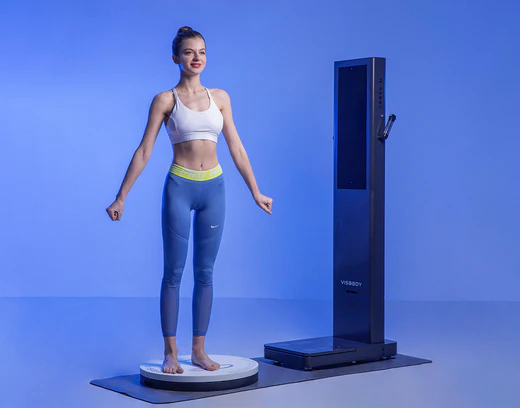
3D-kehoskannereista on tullut suosittu työkalu kuntoilualalla. These devices use infrared or white light to map the surface of the body, creating a three-dimensional model.
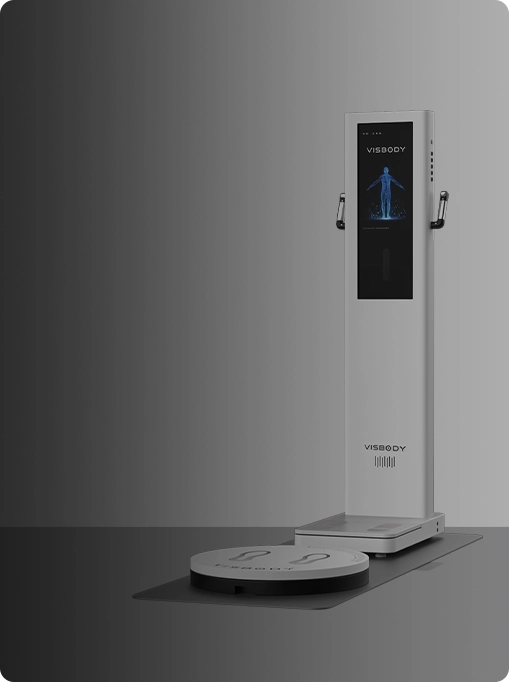
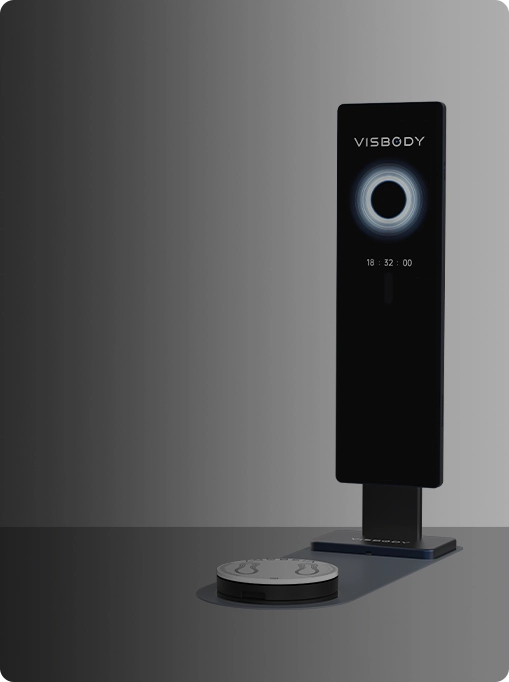
3D body scanners are generally safe, using primarily non-invasive methods to track fitness progress with high accuracy. Visbody skannerit, particularly the Visbody-S 30, integrate multiple technologies. The device uses non-invasive methods such as BDA and MUF technologies and a minimally invasive method like BIA to provide comprehensive body analysis. This combination allows for a holistic and accurate assessment while maintaining safety standards.
Sisällysluettelo
How Do 3D Body Scanners Work in the Fitness Industry?
Kuntoteollisuudessa, 3D kehoskannerit like the Visbody S30 utilize a combination of non-invasive and minimally invasive techniques. They use BDA and MUF technologies to capture detailed images of the body and BIA technology to analyze body composition. The scanners typically employ infrared or structured light, along with mechanical turntables and depth-sensing 3D cameras, to create a comprehensive three-dimensional model.
This allows us to measure body composition, ryhti, ja muita mittareita, providing valuable insights for fitness enthusiasts and professionals. Unlike medical imaging technologies such as X-rays or MRIs, 3D body scanners don’t expose us to ionizing radiation, making them safe for regular use.
Applications of 3D Body Scanning
In addition to fitness, 3D body scanning technology is employed in healthcare for monitoring physical changes and planning medical procedures.
- Terveydenhuolto: In medical settings, 3D body scanners assist in monitoring body changes over time for fitness goals or even planned surgeries. Esimerkiksi, they can track the progression of conditions like scoliosis or assist in preoperative planning for reconstructive surgery, while providing accurate body composition data using BIA and BDA technologies.
- Fitness: In fitness centers, 3D scanners help individuals track their physical changes, providing detailed reports on body fat percentage, lihasmassa, ja enemmän. This data is invaluable for tailoring workout and nutrition plans to meet specific goals.
Tutustu kaikkiin 3D-kehoskannerimme
Health Risks and Safety Concerns Related to 3D Body Scanners
Despite their benefits, some concerns about the safety of 3D body scanners persist. Full body scanners use non-ionizing radiation, which is safe and poses no health risks, to gather and analyze bodily data for creating a 3D model.
Säteilyaltistus
One of the primary safety concerns with imaging technologies is radiation exposure. kuitenkin, 3D kehoskannerit, mukaan lukien Visbody-S 30, use harmless forms of light, such as infrared, and minimally invasive methods like BIA. Unlike an MRI machine, which uses magnetic fields and radio waves to create detailed images of the body’s internal structures, these scanners do not pose health risks associated with ionizing radiation, unlike X-rays or CT scans. The combination of these technologies ensures safe, tarkka, and detailed body analysis.
The use of non-ionizing radiation ensures that these devices are safe for repeated use without the concern of cumulative radiation exposure.
Privacy Issues
Data privacy is crucial in 3D body scanning, as sensitive body data is collected, leading to concerns about its storage and use. It’s essential for service providers to implement robust data security measures to protect user information from unauthorized access or breaches. Users should be informed about how their data is stored, who has access to it, and how it may be used or shared.
Psychological Impact
The detailed imagery from 3D body scanners can impact users psychologically. For some, this information can be motivating and empowering. kuitenkin, for others, it may lead to increased anxiety or body image issues, particularly if the data highlights perceived flaws. It’s crucial for users to approach these measurements with a healthy mindset and for providers to offer supportive guidance.
Regulations and Standards
To ensure the safe use of 3D body scanners, several regulatory standards and best practices are in place.
Regulatory Oversight
In the U.S., the FDA and FCC regulate the safety and efficacy of 3D body scanning devices. These organizations set guidelines for device manufacturing, data handling, and user safety. Compliance with these standards is crucial for ensuring that the scanners are safe for public use.
Industry Best Practices
Beyond regulatory requirements, the industry has established best practices for the safe use and handling of 3D body scanner data. This includes implementing strong data encryption, obtaining user consent for data collection and use, and providing clear information on data privacy policies. Companies are also making continuous improvements to enhance the safety and accuracy of these devices.
Expert Opinions and Research Findings
Health Expert Insights
Healthcare professionals generally support the use of 3D body scanners, highlighting their non-invasive nature and the valuable data they provide for both medical and fitness purposes. Experts confirm that 3D body scanners pose minimal health risks when used correctly.
Technological Advances in Detailed Images
Recent technological advancements have further improved the safety and functionality of 3D body scanners. Innovations include enhanced data security features, improved scanning accuracy, ja käyttäjäystävällisempiä käyttöliittymiä. As the technology evolves, it is likely that these devices will become even safer and more accessible.
Tips for Safe Use of 3D Body Scanners
For those considering the use of 3D body scanners, here are some tips to ensure a safe and positive experience. Verify that the facility uses advanced technology for accurate data capture, essential for detailed 3D models.
Choosing the Right Facility
When selecting a facility or service provider, inquire about their data security measures and how they handle user information. Ensure that they comply with regulatory standards and best practices.
Personal Safety Measures
As a user, you should be aware of your rights regarding data privacy. Always read and understand consent forms before undergoing a scan. If uncomfortable with how data might be used, feel free to ask for clarification or opt-out.
Final thoughts
3D kehoskannerit, particularly those used in the fitness industry, are generally safe and offer numerous benefits for tracking and improving physical health. While there are some concerns regarding data privacy, psychological impact, and the minimally invasive nature of BIA technology, adherence to regulatory standards and best practices helps mitigate these risks. The integration of technologies like BIA, BDA, and MUF in devices like the Visbody-S 30 provides comprehensive and accurate body analysis, making 3D body scanning a valuable tool in healthcare and fitness. As the technology continues to advance, 3D body scanning is likely to become an even more integral tool in healthcare and fitness.